
How to Lose Belly Fat: Visceral Fat and What Actually Works?
Learn how to lose belly fat through a calorie deficit, reducing visceral fat, managing cortisol, and improving sleep. Includes TDEE-based calorie targets and a realistic timeline.

Your body has a number. Let's find it.
We calculate the exact calorie target your body needs, built from your stats and goal, then track everything against it daily. Log meals, add workouts, set a weight goal, and watch your numbers update in real time. Check in weekly to see calories, water, and weight trend in one place.
No spreadsheets. No guessing. Just results.
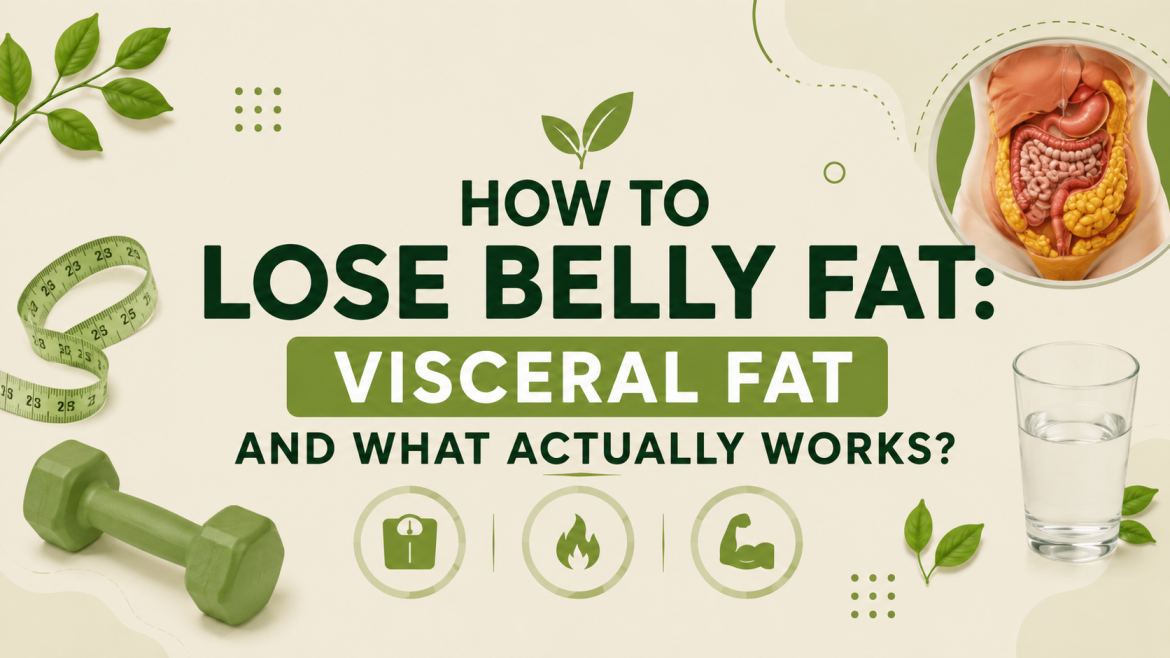
Belly fat is stored in two distinct layers: subcutaneous fat just under the skin, and visceral fat packed around the internal organs. Visceral fat is the medically significant type. It raises the risk of type 2 diabetes, cardiovascular disease, and metabolic syndrome. Reducing belly fat requires a calorie deficit, not targeted exercises.
Spot reduction is a confirmed myth. No abdominal exercise, cream, or belt removes fat from the belly alone. The body loses fat systemically, pulling from stored reserves throughout the body based on genetics, hormones, and calorie balance. Visceral belly fat responds well to a calorie deficit, and research shows that even a 10-pound weight loss can shrink visceral fat volume by as much as 30%. Use the TDEE weight loss calculator to get your personalized daily calorie target in under 60 seconds.
This article covers how to lose belly fat through a TDEE-based calorie deficit, the role of visceral versus subcutaneous fat, cortisol, sleep, and a realistic timeline for how long it takes to get rid of belly fat.
What Is Belly Fat and Why Is Visceral Fat Dangerous?
Belly fat exists in two distinct types, each with different metabolic consequences.
Subcutaneous Fat sits just below the skin surface. It is the soft fat you can pinch. This type does not carry the same health risks as visceral fat, though excess amounts still indicate a high overall body fat percentage.
Visceral Fat is stored deep within the abdominal cavity, surrounding the liver, pancreas, and intestines. It acts as an endocrine organ, releasing inflammatory cytokines and free fatty acids that disrupt insulin sensitivity and raise cardiovascular risk.
Fat Type | Location | Health Risk | Primary Driver |
|---|---|---|---|
Subcutaneous | Under skin surface | Low to moderate | Overall caloric surplus |
Visceral | Around abdominal organs | High | Caloric surplus, cortisol, poor sleep |
Waist circumference is a more reliable marker of visceral fat than body weight alone. A waist above 35 inches in women or 40 inches in men signals elevated visceral fat and increased metabolic risk. Use the BMI calculator and body fat calculator together for a more complete picture of your composition.
How Does a Calorie Deficit Help Lose Belly Fat?
A calorie deficit to lose belly fat works because visceral fat is particularly responsive to energy restriction. A 2023 review of 40 clinical trials confirmed that people following calorie-restricted diets lost significantly more visceral fat than those who did not restrict intake.
Use your TDEE calculator to find your total daily energy expenditure, then subtract 300 to 500 calories per day to create a sustainable belly fat calorie deficit.
What Calorie Deficit Targets Belly Fat Most Effectively?
A deficit of 500 calories per day produces approximately 1 pound of fat loss per week. A deficit of 750 calories per day produces closer to 1.5 pounds per week.
300 to 500 calorie deficit: Steady, sustainable fat loss with minimal muscle loss
500 to 750 calorie deficit: Faster loss, still safe for most healthy adults
Over 750 calories: Accelerates muscle loss and increases fatigue risk
Visceral fat responds faster than subcutaneous fat because it is metabolically active. Many people notice waist reduction before they see visible changes in thigh or arm fat. Confirm the daily intake target that produces a consistent weekly deficit by cross-checking your TDEE minus 500 calories.
Can You Target Belly Fat With Diet Alone?
You cannot target belly fat specifically, but dietary choices do influence visceral fat accumulation and loss.
Diets that reduce visceral fat include:
High protein intake (1.6 to 2.2 grams per kilogram of body weight) to preserve lean mass during a deficit
Reduced refined carbohydrates and added sugars, which are strongly linked to visceral fat accumulation
High soluble fiber intake from oats, legumes, and vegetables, which reduces belly fat accumulation over time
Unsaturated fats from olive oil, nuts, and fatty fish rather than trans fats and saturated fat
A 2025 study published in Nature Metabolism found that caloric restriction can convert white fat cells into energy-producing brown fat cells. This metabolic shift supports both visceral fat reduction and improved insulin sensitivity.
Foods that drive visceral fat accumulation:
Refined sugar and high-fructose corn syrup
Trans fats found in processed and fried foods
Alcohol, which is directly linked to visceral fat storage in the abdominal region
Ultra-processed foods high in sodium and refined seed oils
Why Do I Lose Weight Everywhere Except Belly?
Fat distribution is largely genetic. Some people carry more fat in the abdominal region due to hormonal profiles and genetic fat-cell distribution patterns.
For this reason, why you lose weight everywhere except belly is often down to fat distribution order. You deplete fat from easily mobilized stores first, which may be arms, face, or thighs, before reaching deep abdominal reserves.
Cortisol and Belly Fat
Cortisol, the primary stress hormone produced by the adrenal glands, preferentially stores fat in the visceral compartment. Elevated cortisol from chronic stress, sleep deprivation, or very low calorie diets signals the body to hold onto abdominal fat as an energy reserve.
3 major cortisol drivers of visceral fat accumulation:
Chronic psychological stress raises baseline cortisol and promotes fat cell differentiation in the visceral region
Sleep under 6 hours per night is associated with elevated evening cortisol, directly linked to belly fat retention
Aggressive caloric restriction below 1,000 calories triggers a cortisol stress response that slows visceral fat mobilization
Managing stress through consistent sleep (7 to 9 hours), reducing processed food intake, and avoiding extreme deficits all support lower cortisol and faster belly fat loss.
How Long Does It Take to Lose Belly Fat?
At a 500-calorie daily deficit, most people lose 1 to 2 pounds per week. Because visceral fat is more metabolically active than subcutaneous fat, it tends to be shed earlier in the weight loss process.
Weight Loss Amount | Estimated Timeline at 500 Cal/Day Deficit | Expected Waist Reduction |
|---|---|---|
5 pounds | 3 to 4 weeks | 0.5 to 1 inch |
10 pounds | 6 to 8 weeks | 1 to 1.5 inches |
20 pounds | 12 to 16 weeks | 2 to 3 inches |
These are estimates based on population averages. Individual results vary based on starting body fat percentage, genetics, activity level, and consistency.
To track progress accurately, measure waist circumference at the navel weekly in addition to tracking scale weight. Waist reduction is a more direct measure of visceral fat loss than body weight alone.
Belly Fat in Men vs. Women: What Is the Difference?
Men accumulate belly fat earlier and in higher concentrations than premenopausal women because testosterone promotes visceral fat storage in males. Women typically store more subcutaneous fat in the hips and thighs due to estrogen's fat distribution effects.
After menopause, estrogen levels drop sharply. This hormonal shift redirects fat storage from the hips toward the abdomen, which is why postmenopausal women show rapid visceral fat increases. For a full breakdown of how calorie needs and fat distribution shift after menopause, see the TDEE after menopause guide.
Key differences between belly fat in men and women:
Men reach visceral fat risk thresholds (40-inch waist) more quickly than women
Women in their reproductive years carry more subcutaneous than visceral belly fat
Post-menopausal women lose the protective estrogen effect and accumulate visceral fat at rates similar to men
Sleep deprivation drives cortisol-related belly fat in both sexes, but the hormonal interaction differs by sex
Both men and women reduce belly fat through the same mechanism: a sustained calorie deficit, adequate protein, resistance training, and sleep. The process is identical regardless of sex; only the hormonal drivers of fat distribution differ.
Does Sleep Affect Belly Fat?
Sleep and belly fat are directly connected through cortisol and insulin resistance. Research confirms that sleeping fewer than 6 hours per night elevates cortisol, which specifically increases visceral fat storage in the abdominal region.
A meta-analysis published in 2025 confirmed that short sleep duration (under 7 hours) disrupts ghrelin and leptin levels, increasing hunger and promoting caloric surplus that accumulates preferentially as visceral fat.
Practical sleep targets for belly fat reduction:
7 to 9 hours of uninterrupted sleep per night reduces cortisol and supports fat mobilization
Consistent sleep and wake times stabilize the circadian rhythm, which regulates cortisol peaks
Poor sleep quality, even without short duration, impairs glucose metabolism and promotes belly fat retention
For a complete breakdown of how sleep affects weight loss outcomes, see sleep and weight loss.
Subcutaneous vs. Visceral Fat Loss: Which Goes First?
Visceral fat is mobilized before subcutaneous fat in most individuals following a calorie deficit. This is because visceral fat cells have higher concentrations of beta-adrenergic receptors, which respond more readily to catecholamines (epinephrine and norepinephrine) that signal fat breakdown.
The order of fat loss typically follows:
Glycogen depletion in the first 1 to 2 weeks, causing rapid early weight loss
Visceral fat reduction from week 2 onwards, visible as waist circumference reduction
Subcutaneous fat from the belly, flanks, and hips over weeks 4 to 12
Stubborn subcutaneous fat in the lower abdomen and lower back, last to mobilize
This explains the common frustration of losing weight in the face, chest, or arms before seeing change in the belly. The process is working correctly. Visceral fat is leaving first. Subcutaneous belly fat follows with continued consistency.
For tracking how weight loss progress aligns with realistic timelines, review the weight loss timeline guide.
6 Evidence-Based Strategies to Lose Belly Fat Faster?
These 6 strategies target visceral fat specifically, based on peer-reviewed evidence:
Create a 500-calorie daily deficit from your TDEE to produce 1 pound of fat loss per week, then track daily intake against this target consistently.
Eat 0.7 to 1 gram of protein per pound of body weight to preserve lean mass and increase the thermic effect of food, which adds 80 to 100 calories of daily calorie burn. The protein calculator gives your exact daily gram target.
Add resistance training 3 times per week to build muscle, raise resting metabolic rate, and reduce visceral fat independently of cardio.
Reduce added sugar and refined carbohydrates from the diet, as both are directly linked to visceral fat accumulation through insulin-driven fat storage.
Sleep 7 to 9 hours per night to normalize cortisol levels and prevent hormonal belly fat retention.
Increase NEAT (non-exercise activity thermogenesis) by 2,000 to 3,000 daily steps, because NEAT accounts for 15 to 30% of total daily calorie burn. See the full NEAT guide for strategies to raise it without structured workouts.
Frequently Asked Questions About Losing Belly Fat
Can you lose belly fat without exercise?
Yes, a calorie deficit through diet alone reduces total body fat, including visceral belly fat. Exercise speeds up the process and improves metabolic health, but it is not required for belly fat loss. Diet accounts for the majority of weight loss. See how to lose weight without exercise for a complete strategy.
How many calories do I need to cut to lose belly fat?
A deficit of 500 calories per day produces roughly 1 pound of fat loss per week. Starting with your TDEE and subtracting 500 calories is the standard approach. Use the calorie deficit calculator to find your personal target.
Does cortisol cause belly fat?
Yes, elevated cortisol from chronic stress or poor sleep promotes visceral fat storage specifically. Reducing cortisol through adequate sleep, moderate-intensity exercise, and avoiding extreme caloric restriction supports faster belly fat loss.
Why is belly fat the last to go?
Subcutaneous abdominal fat has a higher concentration of alpha-2 adrenergic receptors, which resist fat mobilization. This makes it harder to lose compared to visceral fat or fat in the arms and face. Continued caloric deficit and patience are the only reliable solutions.
How long until belly fat loss is noticeable?
Most people notice waist circumference reductions within 4 to 6 weeks of a consistent 500-calorie daily deficit. Visceral fat responds faster than subcutaneous fat, so internal health improvements occur before visible changes appear.
Is intermittent fasting effective for belly fat?
Intermittent fasting produces belly fat reduction primarily by reducing total daily calorie intake. The eating window restriction leads to a natural calorie deficit. Research shows it is equivalent to continuous calorie restriction for visceral fat loss when total calories are matched. Learn more at intermittent fasting weight loss.