
The TDEE Blog
Read when the numbers stop making sense.
Most people know their calories. Few understand why they're not moving. These articles close that gap by covering metabolism, nutrition, and training without the noise.

Protein and TDEE: How They're Connected?
Protein doesn't just fill a macro target. It changes TDEE directly through digestion cost, suppresses appetite through a mechanism research still can't fully explain, and protects the muscle mass that keeps BMR from falling during a deficit. This guide covers all three pathways and what they mean for your calorie target.

Strength Training and Female Metabolism: How Building Muscle Affects Calorie Burn
The claim that muscle burns dramatically more calories than fat at rest gets repeated everywhere, but the real numbers are far more modest than marketing suggests. This guide covers what controlled research actually measured, why fat-free mass matters more than muscle specifically, and how strength training genuinely affects calorie burn in women.
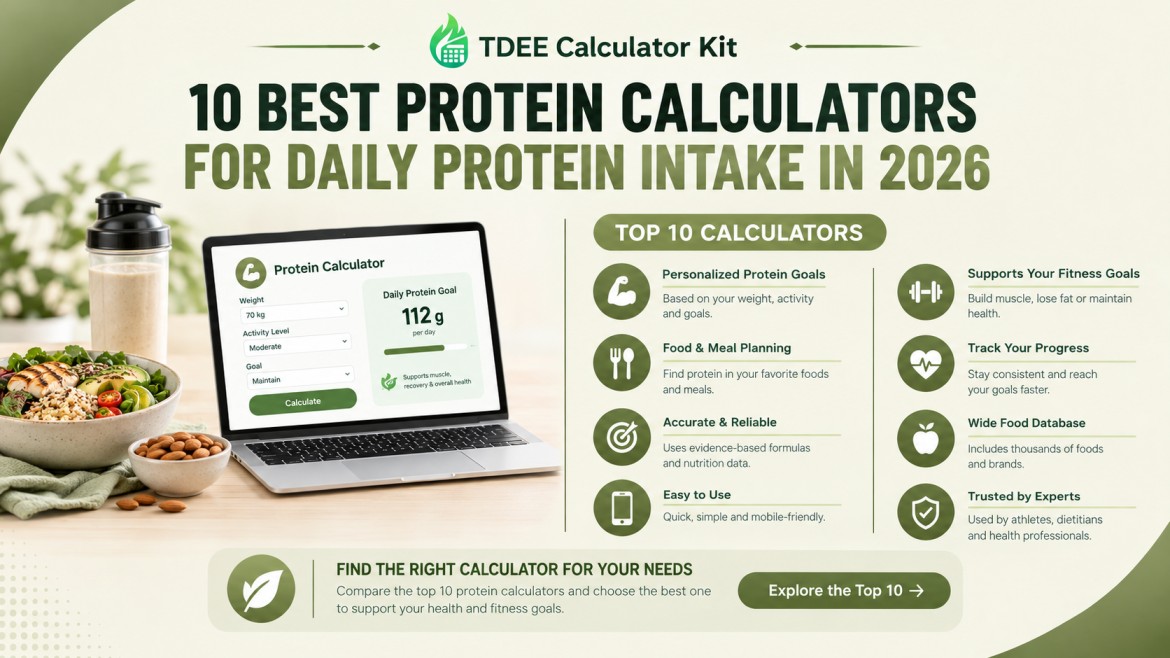
10 Best Protein Calculators for Daily Protein Intake in 2026
Most protein calculators ask for weight and spit out one number. The best ones go further, adjusting for goal, training level, and age, and showing the math behind the result. We compared 10 tools on formula accuracy, output depth, and design to find which ones actually earn a spot in your bookmarks.
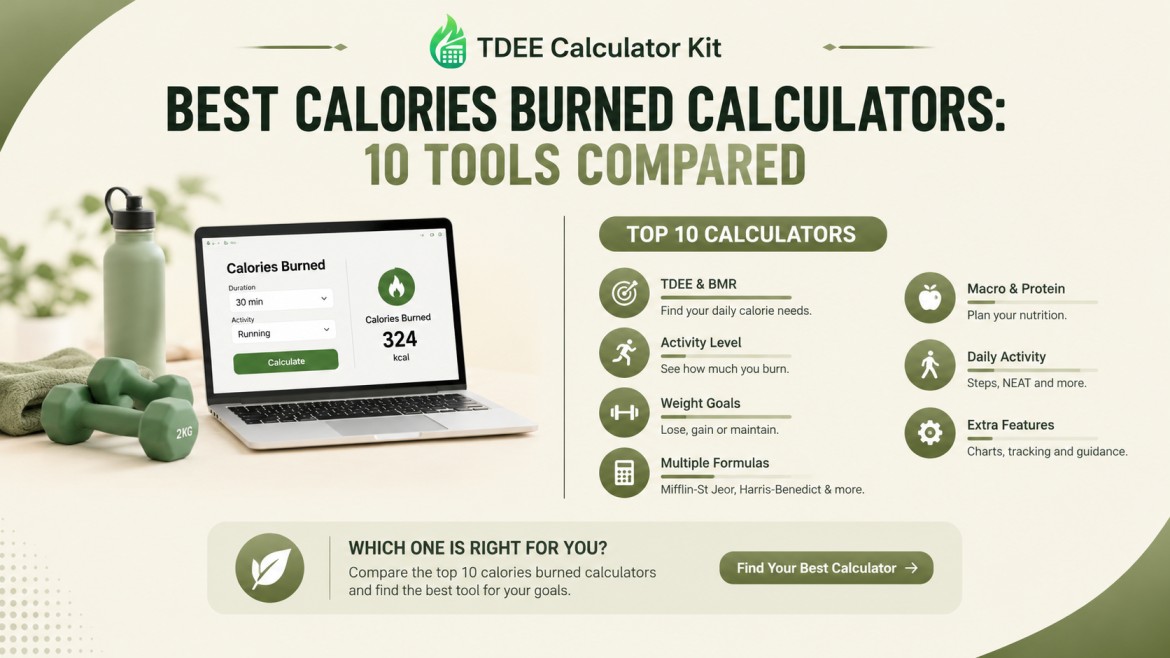
Best Calories Burned Calculators: 10 Tools Compared
Not every calories burned calculator uses the same method, and the gap between a careful MET-based tool and a rough one-size-fits-all guess can be hundreds of calories per session. We reviewed 10 calculators on formula accuracy, activity database depth, and interface quality to find the ones worth trusting.
Best BMI Calculators: 10 Free Tools Compared and Reviewed
Every BMI calculator uses the same formula, but the category rules, age coverage, and context around your result are very different. This guide compares 10 free tools, from CDC and Mayo Clinic to pregnancy and older-adult options, so you can match the right calculator to your situation.
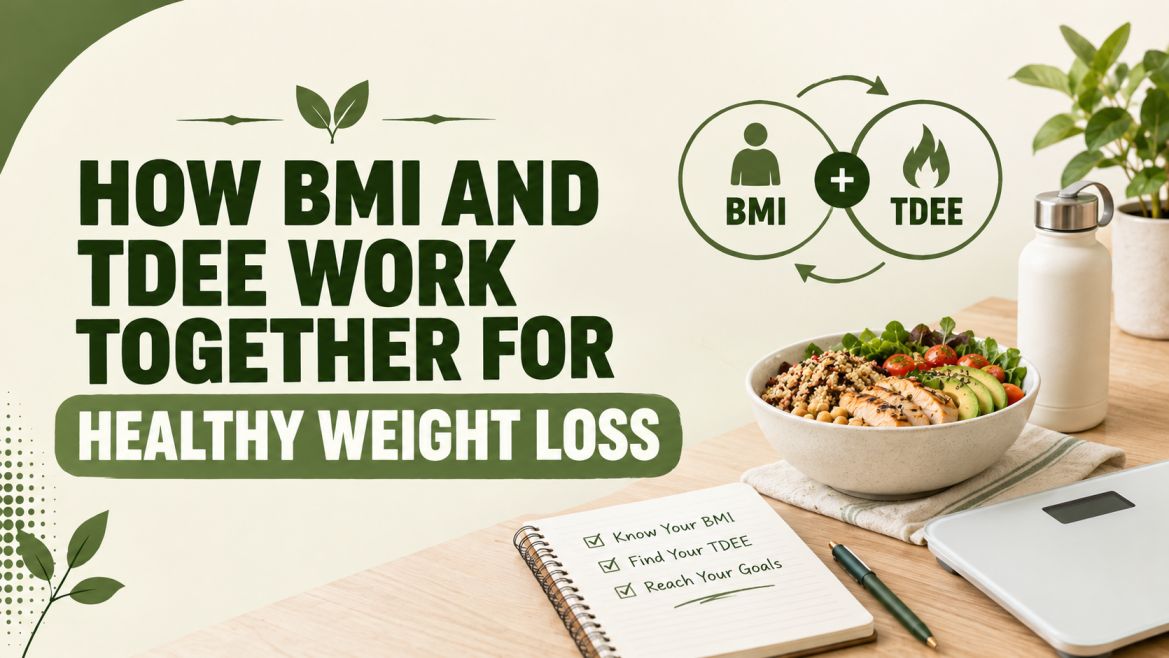
How BMI and TDEE Work Together for Healthy Weight Loss?
BMI and TDEE answer two different questions, and neither is enough on its own. This guide explains how each number works, how the two connect, and how to use both to set a realistic weight goal and a moderate calorie deficit. Worked examples show what each number can and cannot tell you.

Best BMR Calculator: 10 Top Picks Ranked
Most BMR calculators return a single number without saying which formula produced it or whether that formula is actually the right one for you. This guide reviews 10 tools, from dedicated fitness platforms to hospital and telemedicine calculators, ranking each by formula accuracy, output depth, and the companion tools available once you have your number.

How to Lose Weight While Breastfeeding Safely?
Losing weight while breastfeeding is possible without risking milk supply, but the safe approach is more specific than most generic weight-loss advice accounts for. This guide covers the calorie floor multiple lactation authorities agree on, when to start, and what actually protects both milk supply and steady progress.
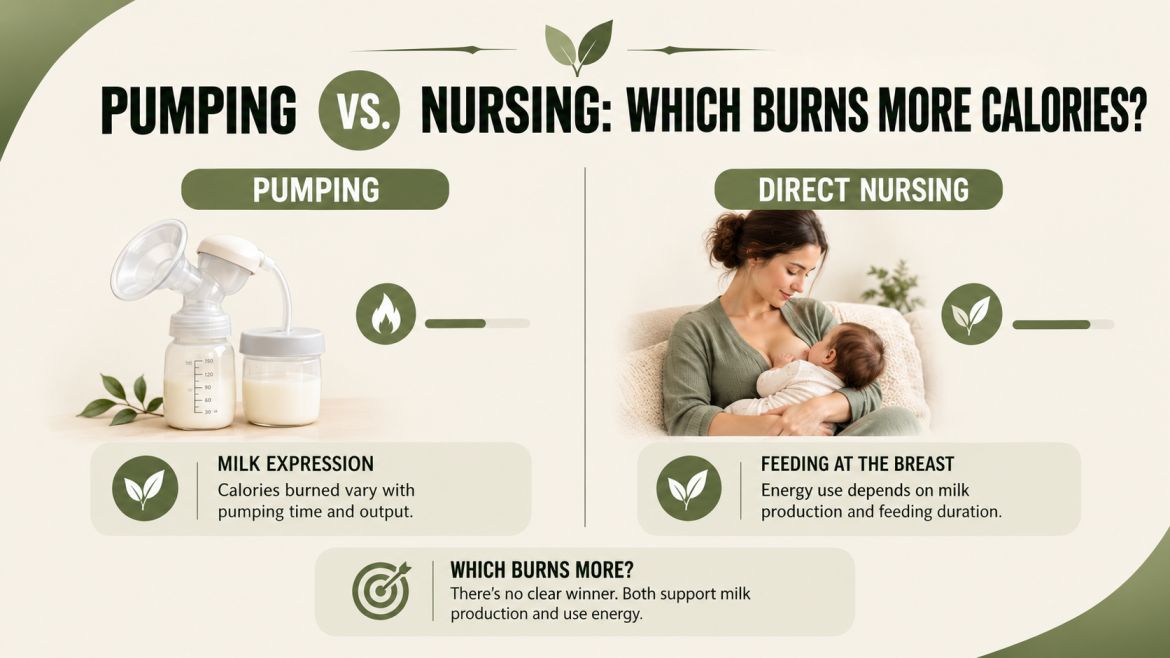
Pumping vs Nursing: Which Burns More Calories?
Pumping and nursing get compared constantly for calorie burn, but no calorimetry study has actually tested the two head-to-head. This guide covers what real doubly-labeled water research shows about the energy cost of lactation, why milk volume matters more than removal method, and how to eat accordingly.

Intermittent Fasting While Pregnant: Is It Safe?
Pregnancy changes how the body responds to fasting in a well-documented way, a phenomenon researchers call "accelerated starvation." This guide covers the physiology behind why intentional fasting isn't recommended during pregnancy, the real risks involved, and what actually supports a healthy pregnancy instead.

Perimenopause Weight Gain: Why It Happens?
Perimenopause weight gain isn't always about the scale number changing. Research shows the rate of fat mass gain nearly doubles during this transition while lean mass simultaneously declines, sometimes with little change in total weight. This guide covers why that happens and what actually helps.

10 Perimenopause Metabolism Signs to Watch For
Perimenopause rarely announces itself with a single obvious symptom. This guide covers 10 research-backed signs, from cycle changes to joint aches to brain fog, that together build a clearer picture of whether this transition is affecting your weight and energy.