
Twin Pregnancy Calories: How Many Do You Need?
Twin pregnancy calorie needs differ meaningfully from singleton guidance, both in total calories and in specific nutrients like iron and folate. This guide covers what ACOG and IOM actually recommend, why under-eating carries documented risks with twins specifically, and how to build an accurate calorie target with your provider.

Your body has a number. Let's find it.
We calculate the exact calorie target your body needs, built from your stats and goal, then track everything against it daily. Log meals, add workouts, set a weight goal, and watch your numbers update in real time. Check in weekly to see calories, water, and weight trend in one place.
No spreadsheets. No guessing. Just results.
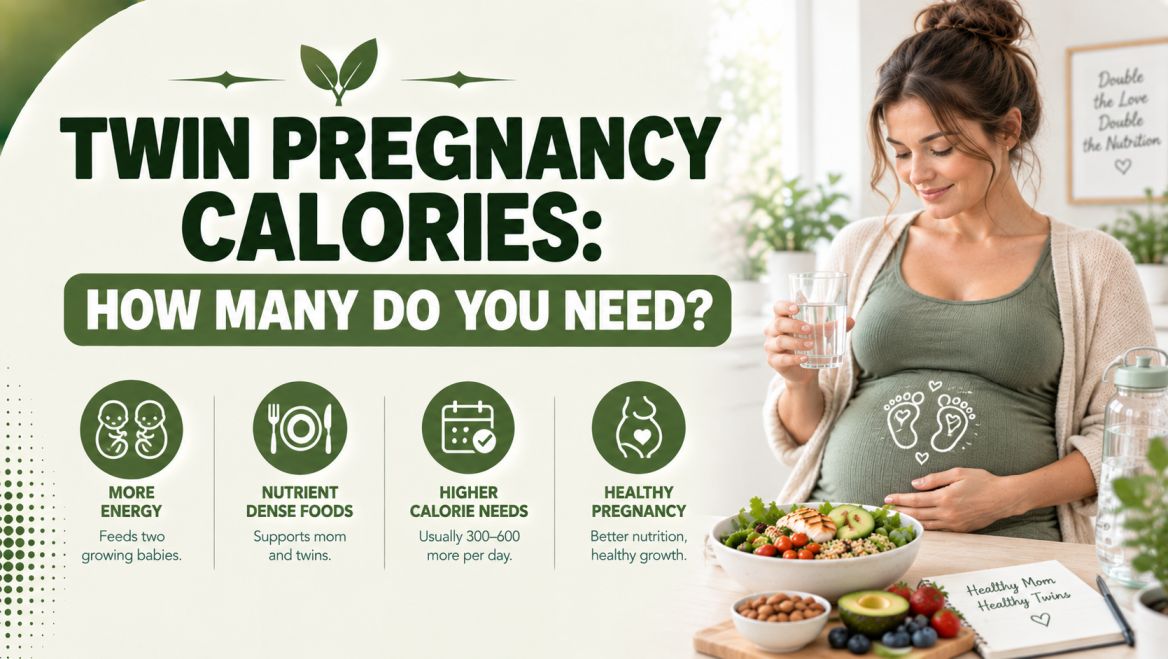
Twin pregnancy calorie needs are not simply double the singleton recommendation. Getting this number wrong carries more documented risk here than in a single-baby pregnancy.
Run the TDEE calculator for pregnancy to get a starting baseline. Work with your healthcare provider to apply the twin-specific adjustments covered in this guide.
This guide covers what ACOG and IOM guidelines actually recommend for twin pregnancies and why specific nutrients need extra attention. It also covers why under-eating carries particular risk in this population.
Twin pregnancies make up a small but growing share of births, and the nutrition research base behind them remains considerably smaller than for singleton pregnancies. This gap in the evidence itself is worth understanding before applying any specific number.
How Many Calories Do You Actually Need With Twins?
Calorie needs increase with each additional fetus, not simply once for the pregnancy overall, which is the most common point of confusion around this topic.
What Does ACOG Recommend?
ACOG guidance adds roughly 300 calories per day for each additional fetus beyond a singleton pregnancy. For twins specifically, this typically works out to 600 to 1,000 additional calories daily compared to pre-pregnancy intake, with needs rising further as pregnancy progresses.
Pregnancy Type | Approximate Daily Addition Above Pre-Pregnancy Intake |
|---|---|
Singleton | 340–450 kcal (second and third trimester) |
Twins | 600–1,000 kcal, increasing through later trimesters |
No official trimester-by-trimester breakdown exists specifically for twin pregnancies. Available research indicates needs increase gradually, with the largest jump typically occurring from the second trimester onward, similar in pattern to singleton pregnancy but larger in magnitude.
What Does This Look Like Applied to Each Trimester?
Combining ACOG's established singleton trimester additions with its separate per-additional-fetus rule gives a reasonable working estimate, even without an official twin-specific chart to reference directly.
Trimester | Singleton Addition (ACOG) | Twin Estimate (Singleton + Per-Fetus Addition) |
|---|---|---|
First | No addition typically needed | Roughly 300 kcal above pre-pregnancy |
Second | +340 kcal | Roughly 640 kcal above pre-pregnancy |
Third | +450 kcal | Roughly 750 kcal above pre-pregnancy |
This table is a calculated estimate built from two separate ACOG principles, not a distinct published twin-trimester chart. First-trimester nausea commonly reduces actual intake below even this estimate for many women, which is normal and worth discussing with a provider rather than a cause for concern on its own.
Why Is There No Official Trimester Breakdown for Twins?
Twin pregnancy research overall relies on a smaller evidence base than singleton pregnancy research. Multiple gestations represent a smaller share of total births studied in large nutrition trials.
This gap explains why so much twin-specific guidance carries a "provisional" or "expert opinion" label rather than a firm consensus number. It is a genuine limitation in the current evidence, not a sign that twin-specific guidance is unimportant or interchangeable with singleton figures.
How Much Weight Should You Gain With Twins?
Total gestational weight gain guidance for twins comes from the same 2009 Institute of Medicine update that revised singleton recommendations. The twin-specific figures carry an important caveat.
Pre-Pregnancy BMI | Recommended Total Weight Gain |
|---|---|
Normal Weight | 37–54 lb (16.8–24.5 kg) |
Overweight | 31–50 lb (14.1–22.7 kg) |
Obese | 25–42 lb (11.3–19.1 kg) |
Underweight | No provisional target set |
These figures are officially labeled "provisional" by the IOM itself, based on more limited data than the singleton guidelines. For underweight women carrying twins, no specific target exists at all, meaning individualized guidance from a provider matters more here than following a generic number.
Is Gaining Too Much Weight a Concern Too, Not Just Too Little?
Excessive gestational weight gain has been separately linked to increased risk of pre-eclampsia, gestational hypertension, cesarean delivery, and preterm birth in twin pregnancies specifically.
Both directions carry documented risk, which is exactly why the IOM ranges exist rather than a single minimum floor. Gaining meaningfully above or below the recommended range for your BMI category both warrant a conversation with your provider, not just gains that fall short.
What Does Weight Gain Typically Look Like Across the Pregnancy?
Twin pregnancies often follow a similar overall pattern to singleton pregnancies: a smaller first-trimester gain, then steadier increases through the second and third trimesters. The total magnitude runs higher throughout.
Trimester | General Pattern Observed |
|---|---|
First | Smaller initial gain, similar in scale to singleton pregnancies |
Second | Steady increase begins, calorie needs rise noticeably |
Third | Continued steady gain, often the largest cumulative increase |
Individual variation within this general pattern is considerable. Nausea, appetite changes, and physical comfort all affect how evenly weight gain distributes across the three trimesters for any individual pregnancy.
Why Do Twin Pregnancies Have Different Nutrient Needs?
Total calories are only part of the picture. Specific nutrient deficiencies appear at meaningfully higher rates in twin pregnancies than in singleton pregnancies.
Does Iron Need Increase?
Iron deficiency anemia occurs 2.4 to 4 times more often in twin pregnancies than in singleton pregnancies. This reflects the combined demand of supporting two developing fetuses and their placentas.
Does Folate Need Increase Too?
Folate deficiency anemia appears roughly 8 times more often in twin pregnancies. This substantial difference has led to a specific recommendation of 1 milligram of folic acid daily for twin gestations, higher than the standard singleton dose.
What About DHA, Vitamin D, and Calcium?
Standard pregnancy guidance recommends 200 to 300 milligrams of DHA daily regardless of pregnancy type. Some specialists suggest twin pregnancies may benefit from 500 to 600 milligrams daily, particularly for women with limited fish intake or plant-based eating patterns.
Nutrient | Standard Recommendation | Suggested for Twins |
|---|---|---|
Folic Acid | 0.4–0.8 mg/day | 1 mg/day |
DHA | 200–300 mg/day | 500–600 mg/day (some specialists) |
Vitamin D | Varies by guideline | Up to 1,000 IU/day (some specialists) |
Calcium | Varies by guideline | 2,000–2,500 mg/day (some specialists) |
These higher figures reflect specialist opinion rather than universal consensus guidelines. Confirming exact targets with a provider, ideally one experienced with multiple gestations specifically, gives more reliable guidance than a general figure alone.
Does Physical Activity Change Calorie Needs Further?
Twin pregnancies commonly involve activity restrictions, particularly in the third trimester, that would not apply the same way in a singleton pregnancy. The higher risk of preterm labor with multiples drives this difference.
This means activity-based calorie adjustments should be more conservative than general pregnancy guidance suggests, not less. Any exercise or activity plan during a twin pregnancy deserves direct provider input given how much individual risk factors vary between pregnancies.
Does This Affect How Much Extra Food You Actually Need Day to Day?
Reduced activity levels compared to a typical singleton pregnancy may partially offset the higher baseline calorie increase covered earlier. The net effect still typically means higher total intake, given the elevated resting energy demands of supporting twins.
This is one more reason a generic calculation falls short here. Activity level, provider-recommended restrictions, and the twin-specific calorie increase all interact in ways a simple formula cannot fully capture without individual context.
What Happens If You Don't Gain Enough Weight?
Under-eating carries specific, documented risk in twin pregnancies that goes beyond the general pregnancy caution against restriction.
A cohort study of twin pregnancies tested this directly. Gestational weight gain below IOM guidelines was associated with adverse neonatal outcomes, including babies born small for gestational age. This risk applied specifically to under-gaining, not simply to any deviation from the guideline range.
This is precisely why intentional calorie restriction is not appropriate during a twin pregnancy without direct medical supervision. The specific safety considerations and what evidence actually supports around weight management during pregnancy are covered in the pregnancy weight loss safety guide, which addresses this question directly and applies with even more caution to twin pregnancies specifically.
Is Intermittent Fasting Safe During a Twin Pregnancy?
Meal timing questions come up frequently in general pregnancy content, and twin pregnancy adds specific considerations to this question beyond the general case.
Elevated calorie needs and documented nutrient demands make compressing eating into a shorter window a specific concern here. These practical concerns do not apply the same way in a general population.
This deserves careful, individualized consideration rather than a general answer. The full evidence review on fasting protocols and pregnancy specifically is covered in the intermittent fasting and pregnancy guide, which should be discussed directly with a provider before any application to a twin pregnancy given the added nutrient and calorie demands here.
How Does a Standard Calculator Need to Be Adjusted for Twins?
A standard pregnancy calculator built around singleton guidance will underestimate needs for a twin pregnancy if used without adjustment.
The baseline starting point still reflects general pregnancy energy needs before any twin-specific correction applies. Adding the twin-specific calorie increase covered earlier in this guide, roughly 600 to 1,000 kcal above pre-pregnancy intake depending on trimester, closes that gap.
This same layered approach applies across every guide in this cluster. The full pregnancy and TDEE overview covers how general pregnancy adjustments work before any twin-specific or trimester-specific correction gets added.
Working through the layers in order avoids the most common calculation error. Applying a twin adjustment to a baseline that was never calculated correctly compounds the mistake rather than fixing it.
Anyone still establishing their pre-pregnancy baseline can start with the general TDEE calculator for women before applying pregnancy and twin-specific adjustments.
What Should a Full Day of Eating Look Like?
Translating these numbers into an actual eating pattern makes the guidance easier to apply consistently across a full day.
What Does a Practical Structure Look Like?
Spreading the increased calorie and nutrient demands across three main meals plus two snacks tends to work better than fewer, larger meals. This matters more as pregnancy progresses and physical comfort during eating changes.
Iron-rich foods (lean meat, legumes, fortified cereals) paired with vitamin C sources to improve absorption
A folate-rich food or supplement source at breakfast to maintain consistent daily intake
A DHA source, such as low-mercury fatty fish or a prenatal supplement, incorporated several times weekly
Calcium-rich foods distributed across the day rather than concentrated in one meal, since absorption is more efficient in smaller amounts
This structure is a starting framework, not a rigid prescription. Individual appetite, nausea, and physical comfort all shift throughout a twin pregnancy specifically, and flexibility within the overall calorie and nutrient targets matters more than rigid meal timing.
What Common Mistakes Undermine Twin Pregnancy Nutrition?
A handful of predictable errors explain most cases where calorie or nutrient intake falls short of what twin pregnancy actually requires.
Do You Apply Singleton Guidance Without Adjustment?
Using a general pregnancy calorie or weight gain target without adding the twin-specific correction is one of the most common mistakes. It is also one of the most consequential.
Do You Focus Only on Calories While Missing Specific Nutrients?
Meeting a calorie target while under-consuming iron or folate specifically misses a real risk. Anemia applies at meaningfully higher rates in twin pregnancies than in singleton pregnancies.
Mistake | Why It Backfires | The Fix |
|---|---|---|
Using Singleton Targets Unadjusted | Underestimates true twin-specific needs | Apply the twin correction covered in this guide |
Calories Without Nutrient Focus | Misses elevated anemia risk specific to twins | Prioritize iron and folate-rich foods deliberately |
Restricting Intake Independently | Under-gaining carries documented risk with twins | Any restriction should involve direct provider guidance |
Ignoring BMI-Specific Targets | A single generic number fits no one precisely | Use the IOM range matching your specific pre-pregnancy BMI |
The pattern across these mistakes is treating twin pregnancy as a scaled-up version of singleton guidance. The evidence throughout this guide points to specific, documented differences that a simple multiplication does not capture.
Frequently Asked Questions About Twin Pregnancy Calories
How Many Extra Calories Do I Need With Twins Compared to One Baby?
ACOG guidance suggests roughly 300 additional calories per fetus beyond a singleton pregnancy. Twin pregnancies typically need 600 to 1,000 calories above pre-pregnancy intake, increasing as pregnancy progresses.
How Much Weight Should I Gain With Twins if I Have a Normal BMI?
IOM provisional guidelines suggest 37 to 54 pounds total for women with a normal pre-pregnancy BMI carrying twins. That range sits higher than the 25 to 35 pounds typical for singleton pregnancies at the same BMI.
Is It Dangerous to Gain Less Than the Recommended Amount With Twins?
Research has found gestational weight gain below IOM guidelines associated with adverse outcomes, including babies born small for gestational age, in twin pregnancies specifically. Adequate weight gain is a genuine safety consideration here.
Do I Need More Iron and Folate With Twins Specifically?
Yes. Iron deficiency anemia occurs 2.4 to 4 times more often, and folate deficiency anemia roughly 8 times more often, in twin pregnancies. This has led to a specific recommendation of 1 milligram of folic acid daily.
What if I'm Underweight and Pregnant With Twins?
The IOM did not establish a provisional weight gain target for underweight women carrying twins, given limited available data for this specific combination. Individualized guidance from a provider matters more here than for any other BMI category.
Can I Follow a Low-Calorie Diet Safely During a Twin Pregnancy?
This is not generally recommended without direct medical supervision, given the documented risks of under-gaining weight specifically in twin pregnancies. Any calorie restriction during a twin pregnancy should be discussed directly with your provider first.
Does Calorie Need Increase Evenly Across All Three Trimesters With Twins?
No official trimester-specific breakdown exists for twin pregnancies specifically. Available evidence suggests needs increase gradually, with the largest increase typically occurring from the second trimester onward.
Should I See a Specialist for Twin Pregnancy Nutrition Guidance?
A provider experienced with multiple gestations can offer more precise, individualized guidance than general figures alone. Much of the twin-specific research still relies on provisional or specialist-level recommendations rather than universal consensus.
Does Excessive Weight Gain Carry Risk Too, or Just Insufficient Gain?
Yes. Excessive gestational weight gain in twin pregnancies has been linked to increased risk of pre-eclampsia, gestational hypertension, and cesarean delivery. The upper end of the IOM range is a genuine consideration too.
Are Twin Pregnancy Nutrient Needs the Same for Identical and Fraternal Twins?
Current guidance does not distinguish between identical and fraternal twins for calorie or nutrient recommendations. Both involve supporting two developing fetuses regardless of zygosity.