
The TDEE Blog
Read when the numbers stop making sense.
Most people know their calories. Few understand why they're not moving. These articles close that gap by covering metabolism, nutrition, and training without the noise.

Protein for PCOS: How Much Do You Need to Lose Weight?
A high-protein diet does more for PCOS than fill a macro target. Research shows it lowers insulin and androgens more than a standard diet at identical calories, and one trial found it doubled fat loss against a calorie-matched control. This guide covers how much protein to eat and why the amount matters as much as the deficit itself.

Inositol for PCOS: Does It Help Weight Loss?
Inositol is one of the most researched supplements for PCOS, with meta-analysis data on insulin, testosterone, and BMI. The evidence is genuinely mixed on weight specifically, and this guide covers exactly what the numbers show, how inositol compares to metformin, and where it fits alongside a calorie plan.

PCOS Weight Loss Plateau: How to Break Through?
A stalled result on a correctly calculated PCOS plan almost always has a specific, findable cause. This guide covers how to tell a real plateau from normal water-weight noise, the PCOS-specific mechanisms that make stalls more common, and exactly when to recalculate your TDEE.

PCOS Belly Fat and TDEE: How Many Calories to Eat?
PCOS frequently shifts where fat gets stored, concentrating it around the midsection more than a standard calorie calculator accounts for. This guide covers what the research actually shows, how many calories to eat, and why standard weight-loss advice often underperforms for this specific population.
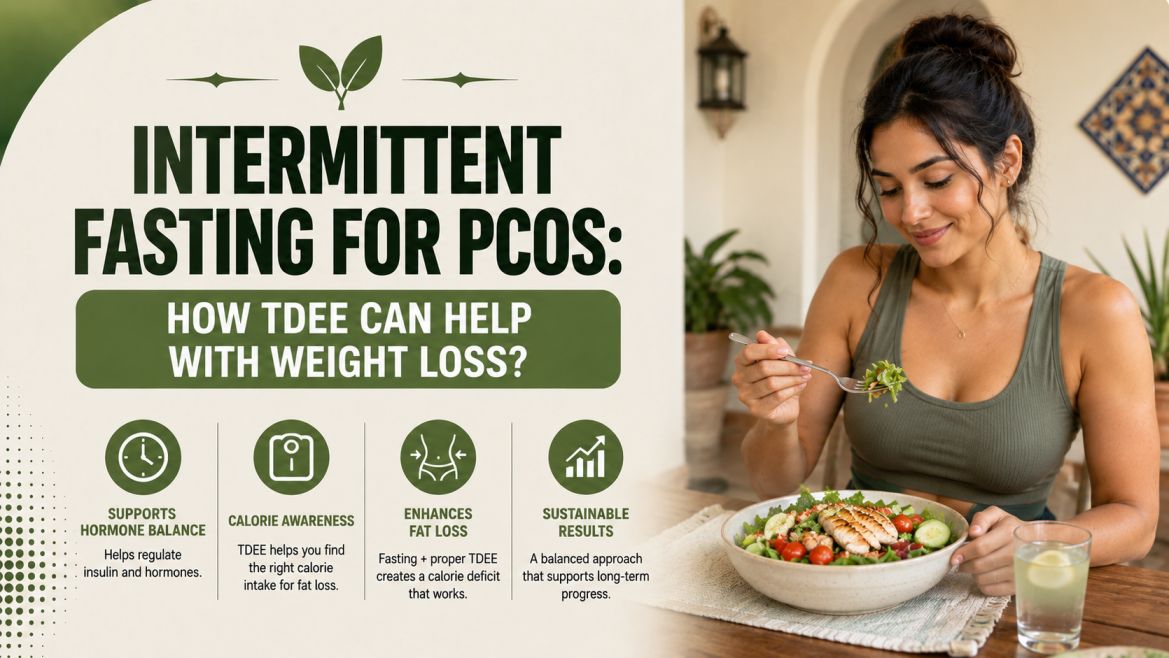
Intermittent Fasting for PCOS: Does It Help TDEE?
Intermittent fasting has research behind it for PCOS specifically, not just general weight loss. A 2025 meta-analysis of 632 women found measurable improvements in insulin sensitivity and testosterone. This guide covers which protocol the evidence actually supports and how fasting fits into a PCOS-adjusted TDEE.
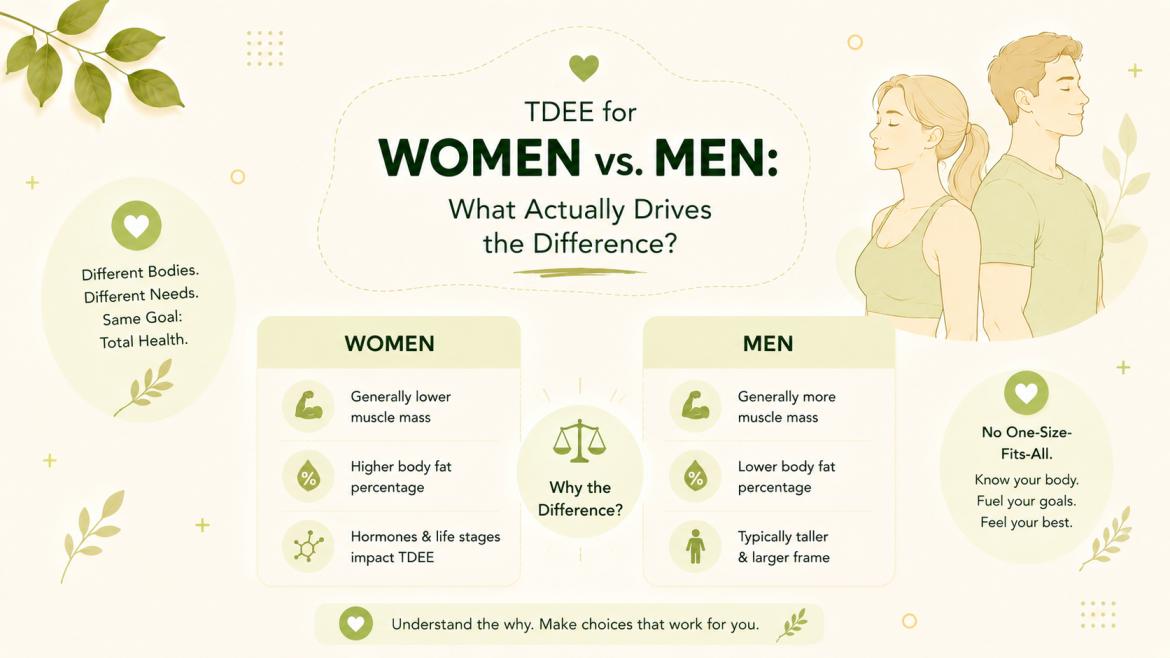
TDEE for Women vs. Men: What Actually Drives the Difference?
Discover what actually drives the TDEE gap between women and men. Covers lean mass, hormones, fat distribution, BMR formulas, weight loss rate differences, and how the gap narrows with age and changes across female life stages.
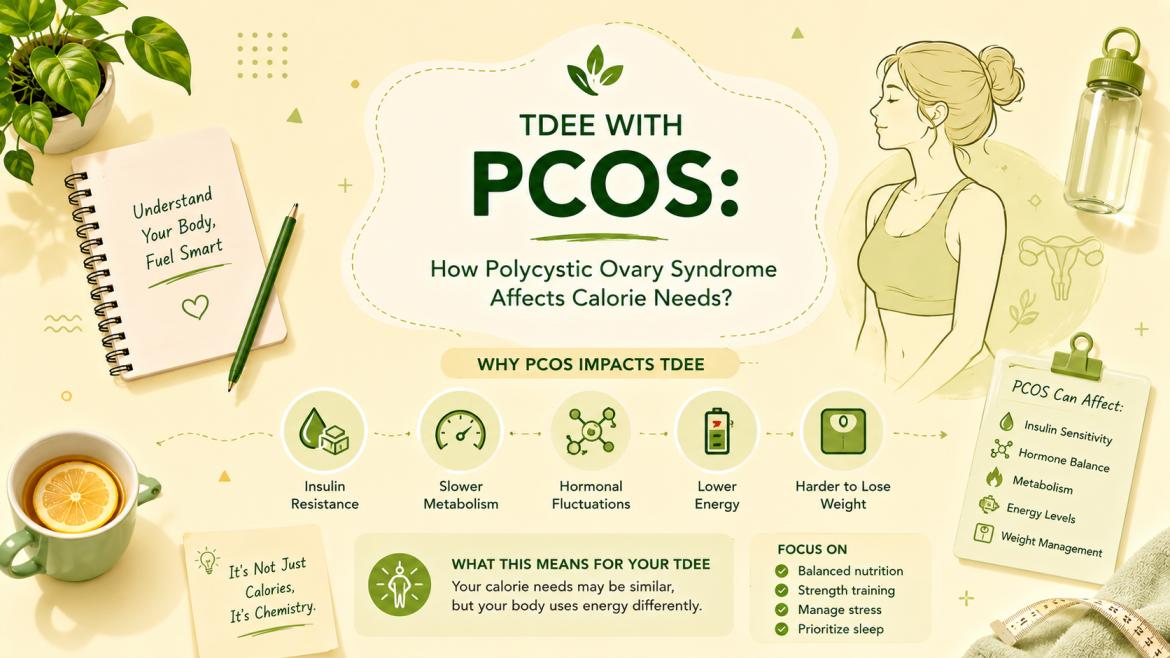
TDEE with PCOS: How Polycystic Ovary Syndrome Affects Calorie Needs?
PCOS affects 8 to 13% of women of reproductive age, and insulin resistance in this population is linked to measurably lower resting metabolic rate. This guide covers what the research shows, why standard calculators overestimate calorie needs, and how to build an accurate target around it.
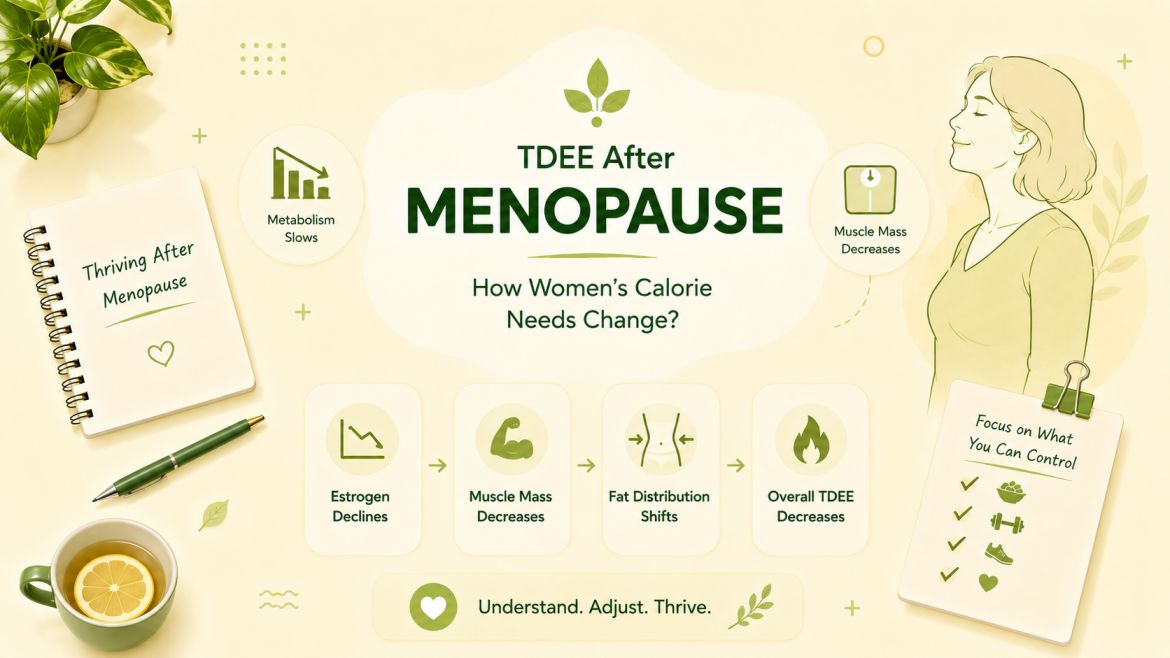
TDEE After Menopause: How Women's Calorie Needs Change?
Learn how menopause changes a woman's TDEE through estrogen loss, sarcopenia, and metabolic shifts. Covers calorie reductions by stage, daily calorie targets, macronutrient needs, and how to recalibrate after menopause.
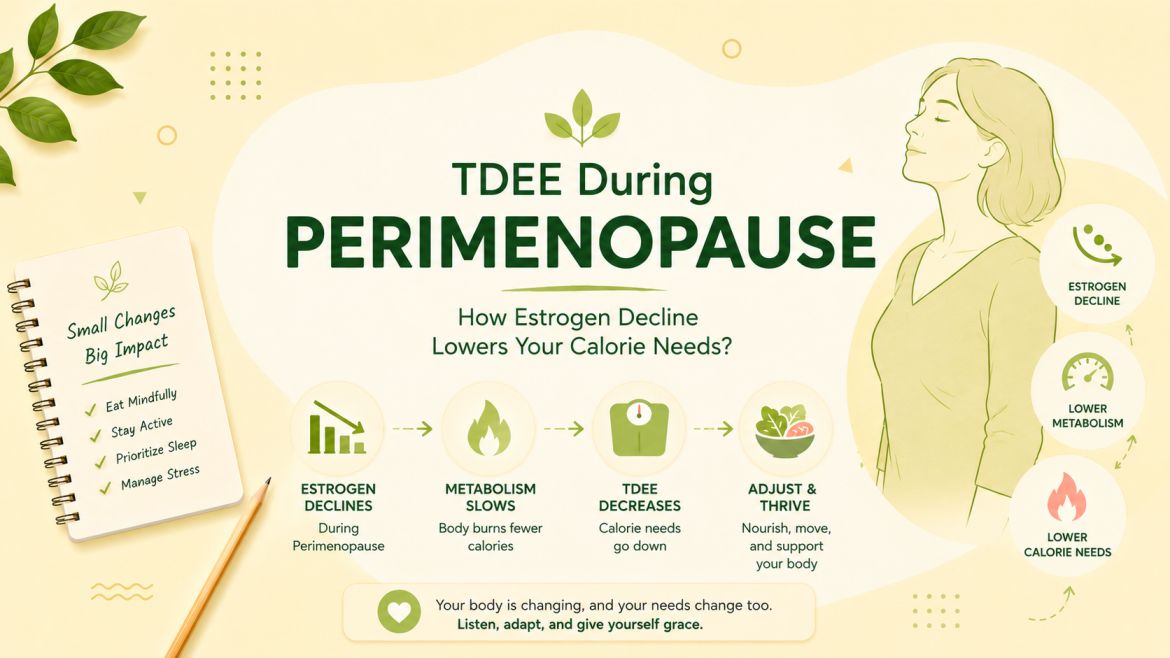
TDEE During Perimenopause: How Estrogen Decline Lowers Women Calorie Needs?
Learn how perimenopause changes your TDEE through estrogen decline, muscle loss, and insulin resistance. Covers calorie reduction by stage, macronutrient targets, and how to recalibrate your daily calorie needs.
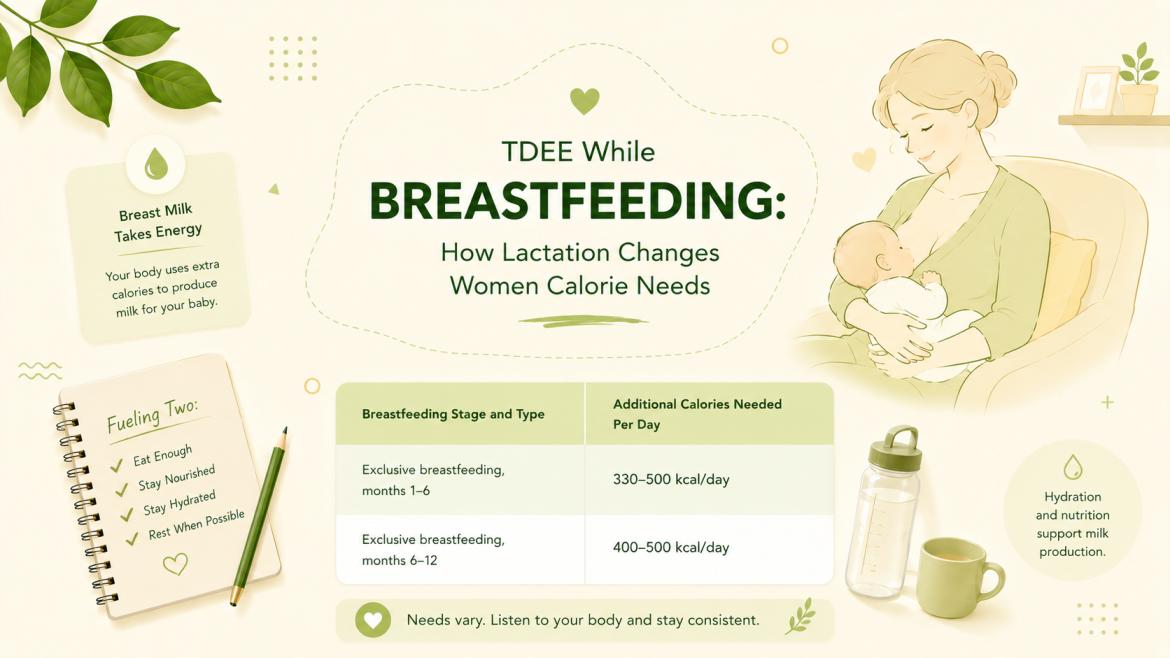
TDEE While Breastfeeding: How Lactation Changes Women's Calorie Needs?
Find out how breastfeeding changes a woman's TDEE. Covers lactation calorie additions by stage, the energy cost of milk production, macronutrient targets, safe postpartum weight management, and how to calculate daily calorie needs while nursing.
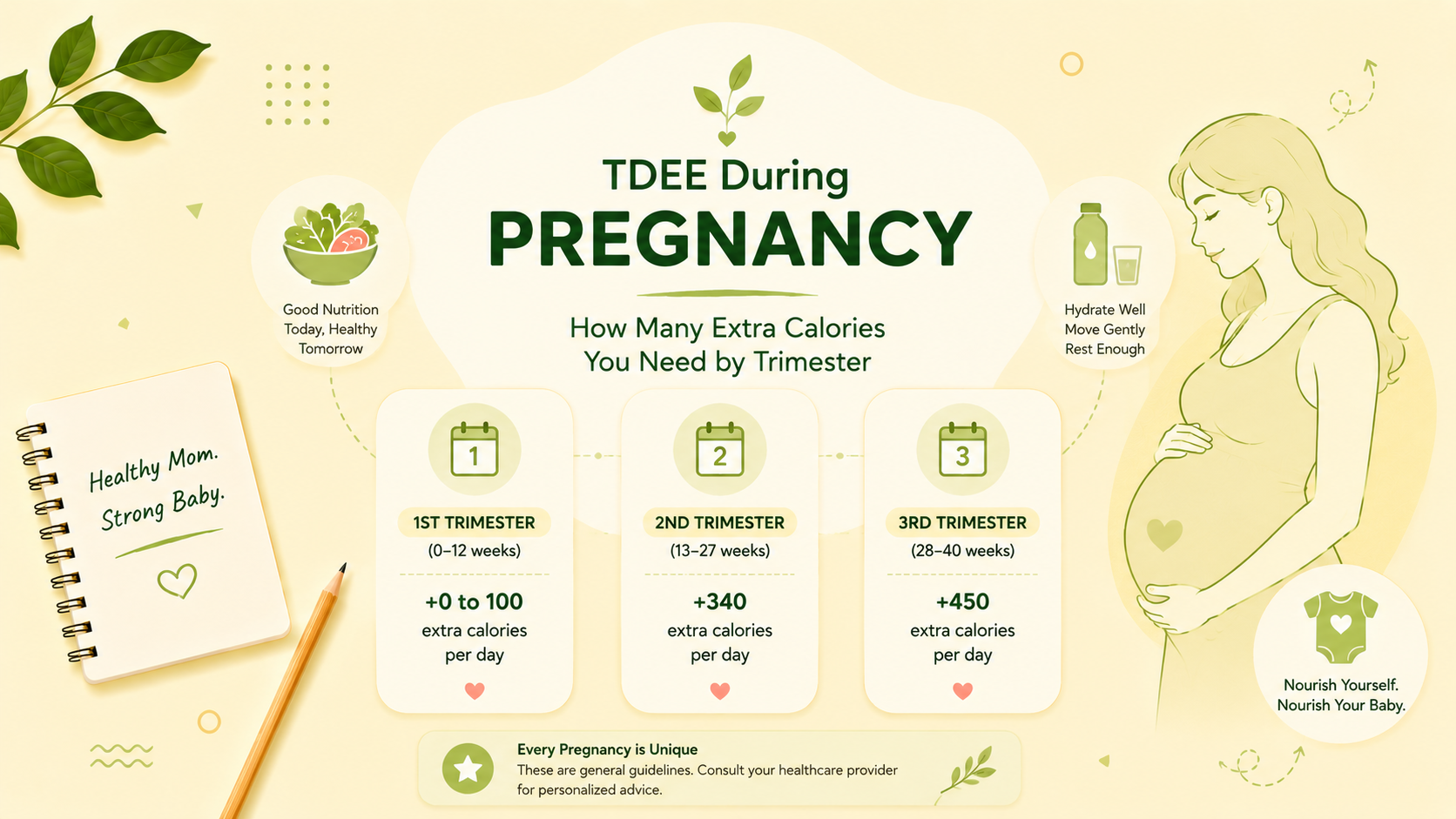
TDEE During Pregnancy: How Many Extra Calories Women Need by Trimester?
Find out how pregnancy changes your TDEE by trimester. Covers IOM calorie additions, BMI-based weight gain targets, macronutrient needs, and how to calculate your daily calorie target for each stage of pregnancy.
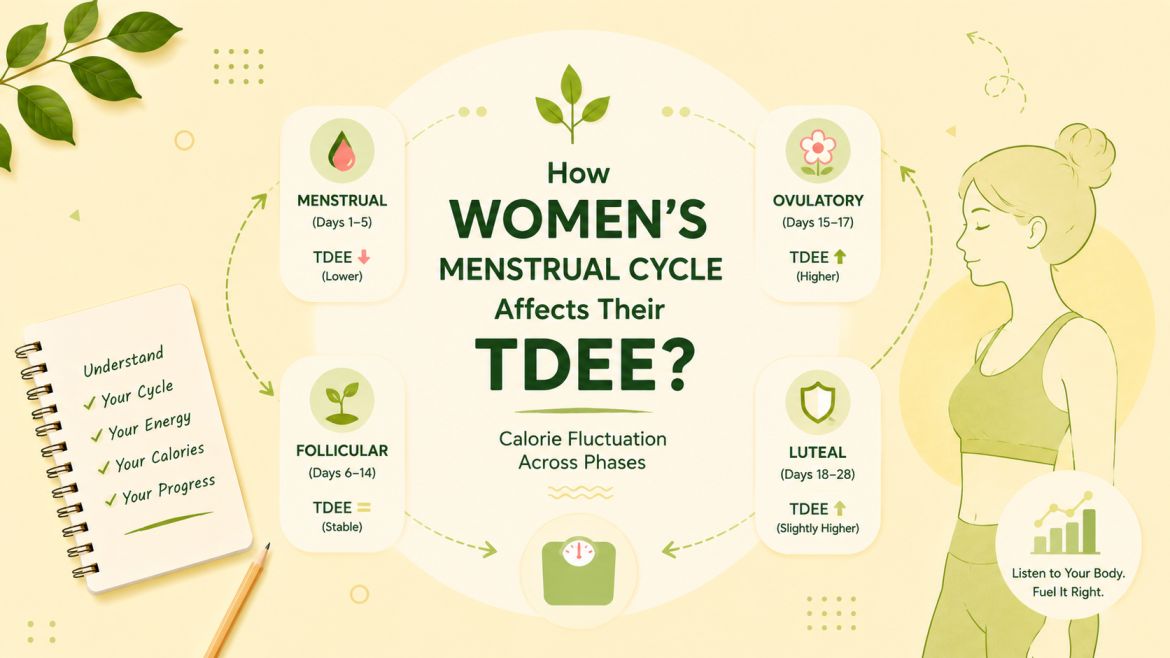
How Women Menstrual Cycle Affects Their TDEE? Calorie Fluctuation Across Phases
Learn how each phase of the menstrual cycle changes a woman's TDEE. Covers resting metabolic rate shifts, progesterone thermogenesis, calorie needs by phase, food cravings, and weight fluctuation explained with research.