
Intermittent Fasting While Pregnant: Is It Safe?
Pregnancy changes how the body responds to fasting in a well-documented way, a phenomenon researchers call "accelerated starvation." This guide covers the physiology behind why intentional fasting isn't recommended during pregnancy, the real risks involved, and what actually supports a healthy pregnancy instead.

Your body has a number. Let's find it.
We calculate the exact calorie target your body needs, built from your stats and goal, then track everything against it daily. Log meals, add workouts, set a weight goal, and watch your numbers update in real time. Check in weekly to see calories, water, and weight trend in one place.
No spreadsheets. No guessing. Just results.
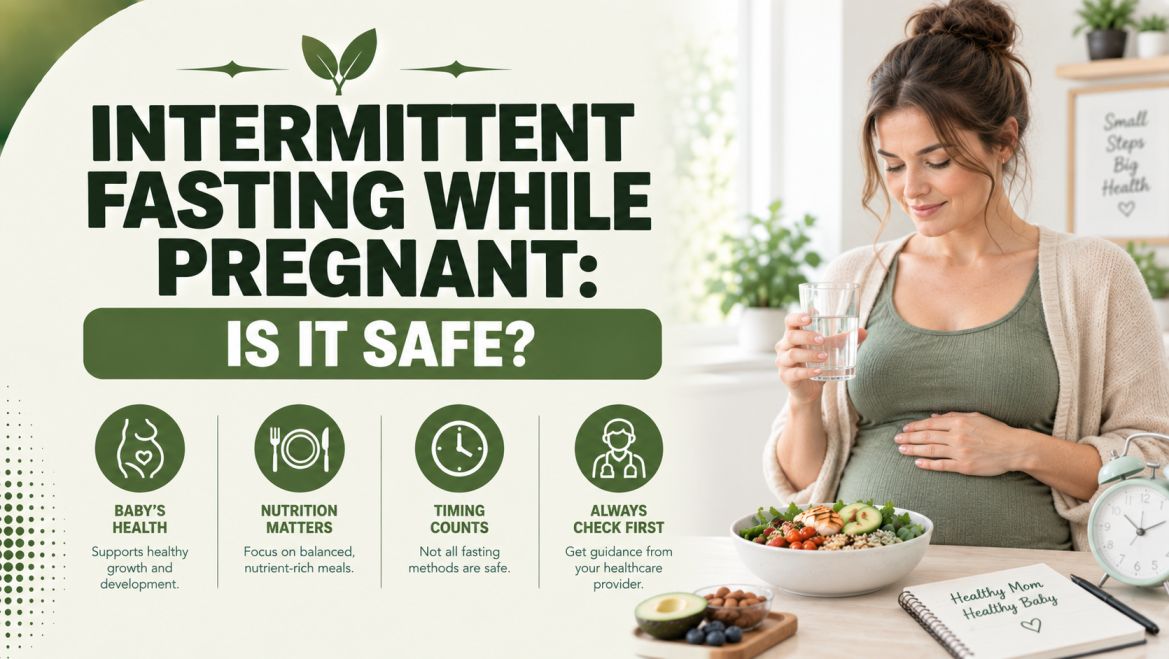
Pregnancy changes how the body responds to going without food, in a way that's been documented in medical research since the 1970s. This isn't a minor adjustment. It's a fundamentally different metabolic state.
Run the TDEE calculator for pregnancy to find your actual calorie needs first. Pregnancy calls for consistent, adequate intake, not a restrictive eating window.
An estimated 3.6 million births occur in the United States annually. Questions about fasting and pregnancy come up often, given how popular intermittent fasting has become outside pregnancy.
This guide covers the physiology behind why intentional fasting isn't recommended during pregnancy and what real risks are documented. It also covers what supports a healthy pregnancy instead, part of the broader picture in the full pregnancy and TDEE guide.
Why Is Pregnancy Different From Normal Fasting Physiology?
The body's response to skipping meals changes substantially during pregnancy, driven by hormones that exist specifically to support fetal development.
What Is "Accelerated Starvation"?
Researchers first documented this phenomenon in 1970. Fasting produces low blood sugar, low insulin, and elevated ketones far faster in pregnant women than in women who are not pregnant.
A classic study tested this directly. Researchers withheld food after a 6 PM dinner and measured blood markers between the 12-hour and 18-hour fasting mark the next day.
Group | Change Between 12 and 18 Hours Fasted |
|---|---|
Non-Pregnant Women | Levels remained essentially stable |
Third-Trimester Pregnant Women | Glucose, insulin, and ketone levels changed profoundly |
This is not a subtle difference. Placental hormones, including human placental lactogen and cortisol, increase insulin resistance during pregnancy, which shunts glucose preferentially toward the fetus. The mother's body switches to fat and ketone metabolism far sooner than it would outside pregnancy.
What Are the Real Risks of Fasting During Pregnancy?
This mechanism translates into documented clinical risks, not just a theoretical concern.
Starvation ketoacidosis is a serious buildup of ketones and blood acidity. It has been reported in pregnant women after caloric restriction that would be harmless outside pregnancy. Case reports describe this developing within roughly 14 days of restriction in some instances, and considerably faster during acute illness or vomiting.
Metabolic acidosis during pregnancy carries documented risks to fetal neurological development. Severe cases in published case reports have been linked to fetal neurological impairment and fetal loss, which is why this isn't a risk to weigh casually against a wellness trend.
Beyond this serious but less common outcome, more routine risks apply too. Worsened nausea and vomiting, dehydration, and reduced nutrient availability for fetal growth all commonly follow.
Does Illness Make This Risk Worse?
Vomiting or acute illness during pregnancy can precipitate the same ketoacidosis risk, often faster than planned fasting alone. Both reduce intake while the underlying insulin resistance and glucose-shunting mechanism stay active.
This is worth knowing specifically because morning sickness already reduces intake for many women without any intentional fasting involved. Persistent vomiting preventing normal eating deserves prompt medical attention rather than being treated as a routine pregnancy symptom to wait out.
How Quickly Can Ketosis Develop?
Research measuring this directly found the defining features of accelerated starvation become measurable after roughly 14 to 18 hours of dietary restriction. This is considerably faster than the multi-day timeline typically associated with fasting risk outside pregnancy.
Fasting Duration | Response in Pregnancy |
|---|---|
Under 12 Hours | Levels generally remain stable |
14 to 18 Hours | Accelerated starvation features become measurable |
Extended Restriction | Risk of clinically significant ketoacidosis increases |
This timeline is considerably shorter than most popular intermittent fasting protocols assume as a baseline. A standard 16-hour fasting window, common outside pregnancy, falls squarely within the range where this research documents measurable metabolic change.
Does the Risk Differ by Trimester?
The accelerated starvation response has been most directly studied in the second and third trimesters, though risk isn't confined to those windows alone.
First trimester fasting carries its own specific concern. Many women already experience nausea and vomiting during this period, and extended gaps without food commonly worsen these symptoms.
The third trimester shows the most pronounced accelerated starvation response in the research measuring it directly. This aligns with the period of most rapid fetal growth, when consistent nutrient and glucose supply matters most.
Does Fasting Help Manage Gestational Diabetes?
This is a reasonable question given how intermittent fasting gets discussed for blood sugar management outside pregnancy, and the research gives a fairly direct answer.
Women with gestational diabetes show the same capacity for accelerated starvation as women with normal pregnancies. Insulin resistance and reduced insulin secretion in gestational diabetes do not provide any special protection against the ketosis this fasting response produces.
The established approach for gestational diabetes works in the opposite direction. Avoiding extended gaps between meals, not creating them intentionally through fasting, is the standard recommendation for managing blood sugar during pregnancy. Any dietary approach to a gestational diabetes diagnosis should be built with a doctor or registered dietitian, not self-directed.
Does This Apply to Twin or Multiple Pregnancies Too?
The concerns covered throughout this guide apply with added weight to multiple pregnancies, given the higher energy and nutrient demands involved.
Twin pregnancies require meaningfully higher calorie and protein intake than a singleton pregnancy, which makes an intentionally restrictive eating window even less appropriate. The specific calorie and nutrient adjustments this higher demand requires are covered in the TDEE for twin pregnancy guide, which addresses this exact life stage in depth.
What Should You Do Instead of Intermittent Fasting?
Understanding why fasting isn't recommended naturally raises the practical question of what actually supports a healthy pregnancy in its place.
Should You Eat Frequent, Smaller Meals?
Given how quickly the accelerated starvation response activates, avoiding long gaps between meals works directly against the mechanism covered throughout this guide. Smaller, more frequent meals and snacks help maintain steadier glucose levels than three large meals spaced far apart.
Does This Mean a Bedtime Snack Matters?
Every person experiences an overnight fast during sleep, pregnant or not. A small bedtime snack containing some protein or complex carbohydrate helps buffer that natural gap before breakfast.
This is not the same as structured fasting, since overnight sleep is unavoidable regardless of intention. A snack specifically timed to shorten that natural gap addresses the exact mechanism covered throughout this guide, particularly relevant given how the original research measuring accelerated starvation specifically studied this overnight window.
What Should Your Calorie Target Actually Reflect?
Pregnancy calls for an accurate, adequate calorie target, not restriction of any kind. A stage-specific calculation accounts for trimester increases most standard formulas miss entirely.
Anyone still confirming their exact stage can start with the general TDEE calculator for women as a baseline.
What If Weight Management Is the Actual Goal?
For women specifically concerned about weight gain during pregnancy, fasting is not the answer. A carefully supervised, adequate approach that still meets fetal nutritional needs in full is the right path.
Weight loss itself is not recommended during pregnancy outside specific medical circumstances. The full breakdown of when and how weight-related concerns should be addressed safely during pregnancy is covered in the pregnancy weight loss safety guide, which addresses this question directly.
Does Nutrient Timing Matter as Much as Total Intake?
Total daily nutrient and calorie intake matters more than precise timing for most pregnancy nutrition goals. This mirrors a pattern seen broadly across nutrition research outside pregnancy too.
This does not mean timing is irrelevant here specifically. Avoiding the extended gaps this guide has focused on throughout still matters, even though obsessing over exact meal timing beyond that principle offers limited additional benefit.
Protein distributed across the day, rather than concentrated in one meal, supports steady energy alongside the frequent-eating pattern already covered. This principle works alongside, not instead of, the total calorie target itself.
What If You Were Already Doing Intermittent Fasting Before Pregnancy?
This is a common and understandable concern, particularly for women who used fasting successfully before conceiving.
Discovering a pregnancy after having fasted for a period beforehand is not typically a cause for alarm on its own. The accelerated starvation response and its associated risks apply specifically to fasting undertaken during pregnancy, once the relevant hormonal changes are underway.
The practical step is simple: stop the fasting pattern once pregnancy is confirmed, then move to consistent, frequent eating going forward. A conversation with a doctor or midwife can address any specific concerns based on individual health history and how far along the fasting continued.
What Common Mistakes Come Up Around This Topic?
A handful of misunderstandings tend to complicate decision-making around fasting and pregnancy specifically.
Do People Assume General Population Research Applies Directly?
Intermittent fasting research conducted in non-pregnant adults does not transfer directly to pregnancy, given the accelerated starvation mechanism covered throughout this guide. Benefits documented outside pregnancy do not automatically apply once this physiology is active.
Do People Confuse Occasional Nausea-Related Skipped Meals With Intentional Fasting?
An occasional missed meal due to nausea differs meaningfully from a structured, intentional fasting protocol undertaken by choice. The former is a symptom to manage; the latter is a decision this guide addresses directly.
Misconception | What's Actually True |
|---|---|
"IF Benefits Apply During Pregnancy Too" | Accelerated starvation changes the physiology entirely; general population research doesn't transfer |
"Occasional Missed Meals Equal Fasting" | Nausea-driven skipped meals differ from intentional, structured fasting |
"GDM Makes Fasting More Helpful" | Same accelerated starvation capacity applies; frequent meals remain the standard approach |
"Fasting Before Pregnancy Causes Ongoing Risk" | Risk applies to fasting during pregnancy specifically, not prior history |
Getting these distinctions right prevents both unnecessary anxiety and unnecessary risk. Understanding what actually applies, rather than assuming general wellness trends transfer automatically, supports better decisions during this specific window.
Frequently Asked Questions About Intermittent Fasting and Pregnancy
Is Any Amount of Fasting Safe During Pregnancy?
Medical guidance does not support intentional fasting during pregnancy given the documented accelerated starvation response. Short, unavoidable gaps between meals differ from a deliberately structured fasting protocol, but the latter is not recommended.
What Is Accelerated Starvation of Pregnancy?
It describes how pregnant women develop low blood sugar, low insulin, and elevated ketones far faster than non-pregnant women during the same fasting duration. Placental hormones drive this by increasing insulin resistance and shunting glucose toward the fetus.
Can Fasting While Pregnant Harm the Baby?
Documented case reports link severe ketoacidosis during pregnancy, which can result from extended fasting, to fetal neurological impairment and fetal loss in serious cases. This is why intentional fasting is not recommended rather than treated as a personal preference.
Does Intermittent Fasting Help With Gestational Diabetes?
No. Women with gestational diabetes show the same accelerated starvation capacity as those with normal pregnancies. The standard recommendation is avoiding long gaps between meals, not creating them intentionally.
Is First Trimester Fasting More Dangerous Than Later Trimesters?
The most direct research on accelerated starvation focused on the second and third trimesters. First trimester fasting carries its own concern, since it commonly worsens nausea and vomiting many women already experience.
Should I Stop Fasting Immediately Once I Find Out I'm Pregnant?
Yes. Moving to consistent, frequent meals once pregnancy is confirmed is the appropriate next step, regardless of how long a fasting pattern was followed beforehand.
Does This Guidance Apply to Religious or Cultural Fasting Too?
The physiological mechanisms covered in this guide apply regardless of the reason behind a fast. Many religious traditions include established exemptions or modifications for pregnant women specifically. A doctor can help work through these alongside any religious guidance involved.
What Should I Do If I Fasted for Several Hours Without Realizing I Was Pregnant?
A single instance, particularly early in pregnancy before hormonal changes fully establish, is unlikely to cause the risks described in this guide. Ongoing concern is best addressed directly with a doctor rather than resolved through guesswork.
Does Breastfeeding Change This Guidance Afterward?
This guide addresses pregnancy specifically. Breastfeeding involves its own separate calorie and nutrient considerations. The accelerated starvation mechanism described here is specific to pregnancy's placental hormone environment, not lactation.
Can Intermittent Fasting Cause a Miscarriage?
Direct research establishing this connection is limited, given the ethical constraints on studying fasting protocols in pregnant populations. The documented accelerated starvation mechanism and its association with serious complications is why intentional fasting is not recommended, independent of a specific miscarriage-risk figure.
Should I Tell My Doctor I Was Doing Intermittent Fasting Before I Got Pregnant?
Yes. Sharing this history allows a doctor to factor it into early pregnancy guidance. It also helps address any specific concerns based on the duration and intensity of the fasting pattern involved.
Is Time-Restricted Eating Different From Full-Day Fasting for This Purpose?
The accelerated starvation research specifically measured overnight and extended fasting windows similar to common time-restricted eating protocols. The same caution applies regardless of whether the approach involves daily windows or less frequent full-day fasts.