The TDEE Blog
Most people know their calories. Few understand why they're not moving. These articles close that gap by covering metabolism, nutrition, and training without the noise.
A weight loss plateau occurs when metabolic adaptation closes your calorie deficit. Learn why the scale stops moving, how NEAT drops, and evidence-based strategies to break through a plateau.

Learn how to lose weight in a month through a calorie deficit and TDEE-based planning. Discover realistic monthly weight loss expectations, a 30-day structure, and why month one differs from month two.

Find out how much weight you can lose in a week safely, why week-one results differ from real fat loss, and the maximum safe rate per week according to clinical guidelines.

Sleep and weight loss are directly linked through ghrelin, leptin, cortisol, and metabolism. Learn how many hours of sleep you need for weight loss and why poor sleep undermines a calorie deficit.

Postpartum weight loss requires a different TDEE calculation for breastfeeding mothers. Learn the safe calorie deficit, timeline for losing baby weight, and how to lose pregnancy weight without affecting milk supply.

Learn how to lose face fat by reducing overall body fat percentage, managing water retention, and understanding why spot reduction in the face is a myth. Includes timeline and diet strategies.

Learn how to lose belly fat through a calorie deficit, reducing visceral fat, managing cortisol, and improving sleep. Includes TDEE-based calorie targets and a realistic timeline.

Learn how intermittent fasting causes weight loss, which method fits your TDEE, how to calculate your eating window calories, and what the research says about 16:8 vs. 5:2 fasting.

Learn how to lose weight without exercise using TDEE, calorie deficits, meal strategies, and lifestyle changes. Includes what works and realistic expectations.

Learn exactly how much protein to eat per day to lose fat without losing muscle. Includes gram targets by body weight, best sources, meal timing, and the science behind protein and fat loss.

Learn the best macro ratios for fat loss, how to calculate protein, carbs, and fat grams from your TDEE, and why hitting your protein target matters more than any other number.

Find out exactly how many calories you need to eat per day to lose weight. Learn how to calculate your number using TDEE, set a safe deficit, and hit your target consistently.

Find out how long it takes to lose 10, 20, 30, or 50 pounds at different calorie deficits. Includes a realistic timeline table, rate guide, and TDEE-based calculation method.

Learn exactly how a calorie deficit causes fat loss, how to calculate it from your TDEE, what deficit size to use, and how to maintain it long-term without losing muscle.

Learn how to lose 100 pounds safely with a TDEE-based plan. Includes realistic timeline, 9-10 TDEE recalculations, diet phase structure, loose skin guidance, and motivation strategy.

Learn how to lose 50 pounds safely using TDEE and calorie deficit. Includes realistic timeline, TDEE recalculation schedule, diet phase structure, and loose skin guidance.

Learn how to lose 30 pounds using TDEE-based calorie deficit. Includes timeline table, TDEE recalculation schedule, diet break strategy, and muscle preservation tips.

Learn exactly how to lose 20 pounds using your TDEE and a calorie deficit. Includes a timeline table at 4 deficit sizes, muscle preservation tips, and a step-by-step plan.

Learn how to lose 5 pounds using your TDEE and a calorie deficit. Includes timeline table, the last 5 pounds strategy, how to lose 5 lbs fast, and a diet-only plan.

Learn exactly how to lose 10 pounds using your TDEE and a calorie deficit. Includes a realistic timeline table, deficit calculations, and a step-by-step fat loss plan.

Discover what actually drives the TDEE gap between women and men. Covers lean mass, hormones, fat distribution, BMR formulas, weight loss rate differences, and how the gap narrows with age and changes across female life stages.

Learn how PCOS changes a woman's TDEE through insulin resistance, hyperandrogenism, and metabolic dysfunction. Covers how PCOS affects BMR and how to set accurate calorie targets.

Learn how menopause changes a woman's TDEE through estrogen loss, sarcopenia, and metabolic shifts. Covers calorie reductions by stage, daily calorie targets, macronutrient needs, and how to recalibrate after menopause.

Learn how perimenopause changes your TDEE through estrogen decline, muscle loss, and insulin resistance. Covers calorie reduction by stage, macronutrient targets, and how to recalibrate your daily calorie needs.

Find out how breastfeeding changes a woman's TDEE. Covers lactation calorie additions by stage, the energy cost of milk production, macronutrient targets, safe postpartum weight management, and how to calculate daily calorie needs while nursing.

Find out how pregnancy changes your TDEE by trimester. Covers IOM calorie additions, BMI-based weight gain targets, macronutrient needs, and how to calculate your daily calorie target for each stage of pregnancy.

Learn how each phase of the menstrual cycle changes a woman's TDEE. Covers resting metabolic rate shifts, progesterone thermogenesis, calorie needs by phase, food cravings, and weight fluctuation explained with research.

Find out how many calories a woman needs per day by age, activity level, and goal. Covers USDA guidelines, TDEE ranges, calorie targets for fat loss and muscle gain, and life-stage adjustments.

Learn how female physiology shapes daily calorie needs. Covers TDEE for women by age, hormones, menstrual cycle, pregnancy, breastfeeding, menopause, and PCOS with calorie ranges and formula breakdowns.

The extra active multiplier is 1.9. Learn who qualifies, how it's used in TDEE calculations, and how it differs from the very active level.

The very active multiplier is 1.725. Learn who qualifies, how it's applied in TDEE calculations, and how it differs from moderately active and extra active levels.

The moderately active multiplier is 1.55. Find out who qualifies, how it's applied in TDEE calculations, and how it compares to lightly active and very active levels.

The lightly active multiplier is 1.375. Learn who it applies to, how it differs from sedentary, and how it changes your daily calorie needs in any TDEE formula.

The sedentary activity multiplier is 1.2. Learn how it works in TDEE formulas, who qualifies as sedentary, and how it changes your daily calorie target.

TDEE activity multipliers convert BMR into total daily calorie burn. Learn what sedentary, lightly active, moderately active, very active, and extra active actually mean, with step counts, job types, and calorie error tables.

The Katch-McArdle equation calculates BMR from lean body mass, not total weight. Learn the formula, how to find lean body mass, worked examples by body fat percentage, and when it outperforms Mifflin-St Jeor.

The Harris-Benedict equation estimates BMR using weight, height, age, and sex. Learn both the original and revised formulas, worked examples, TDEE outputs at all activity levels, and how it compares to Mifflin-St Jeor.

The Mifflin-St Jeor equation calculates BMR using weight, height, age, and sex. Learn the formula, step-by-step worked examples, TDEE outputs by activity level, and when to use a different equation.

Track your daily calorie needs with the TDEE formulas (BMR multiplied by activity factor). Learn how they work, what factors affect them, and how to use them for weight loss or muscle gain.

TEF is the calories burned digesting food, accounting for 8 to 10% of TDEE. Learn how protein, carbs, fat, and whole foods each affect your thermic output and total daily energy expenditure.

EAT is the calories burned during planned exercise, accounting for 5 to 10% of TDEE. Learn how resistance training, cardio, HIIT, and EPOC each affect your total daily energy expenditure.
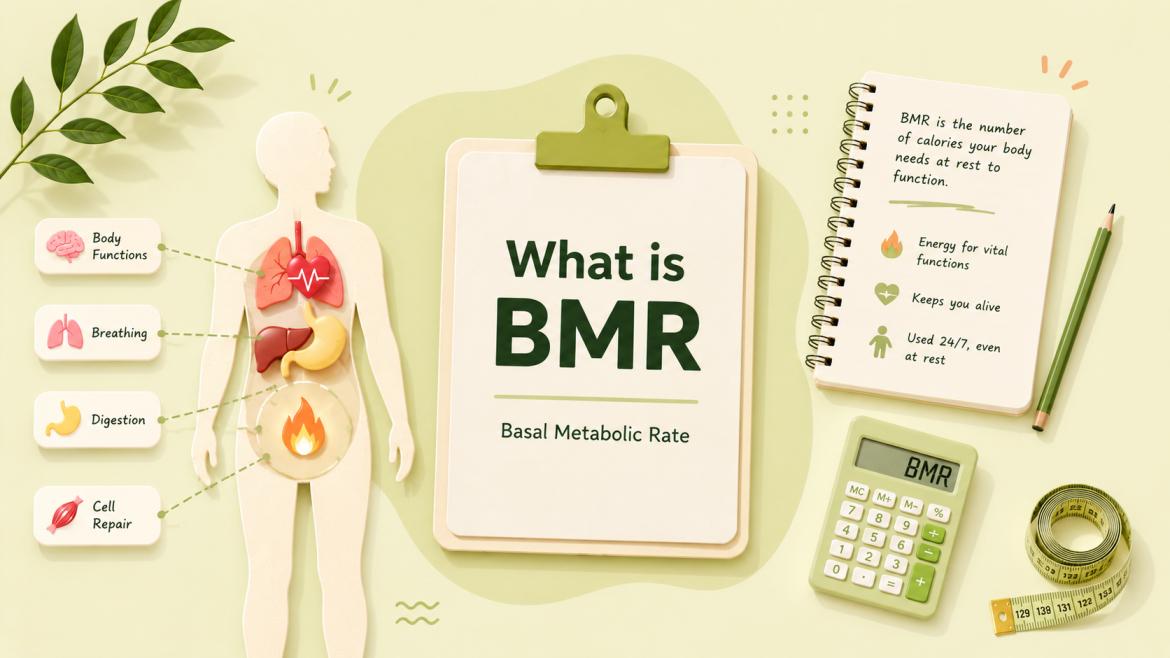
BMR is the largest component of TDEE, accounting for 60 to 70% of total daily calorie burn. Learn how BMR is calculated, what changes it, and how every BMR shift directly affects your TDEE.
Learn how to calculate your TDEE for muscle building, set the right caloric surplus, hit protein targets for muscle protein synthesis, and avoid the mistakes that stall lean mass gain.

Learn how to calculate your TDEE maintenance calories, validate your estimate, manage NEAT shifts, and prevent weight regain after fat loss using accurate calorie balance.

TDEE is your total daily calorie burn, and BMR is your resting baseline. Learn how they differ, how each is calculated using Mifflin-St Jeor and Katch-McArdle, and how to set calorie goals from TDEE.

Learn how to lose weight using your TDEE and a calorie deficit. Covers fat loss steps, macros, timeline, plateau fixes, and every major weight loss approach in one guide.

NEAT is non-exercise activity thermogenesis, the most variable part of TDEE. Learn how to use it to drive fat loss and metabolic health.

TDEE is the total calories your body burns daily. Learn the four components, the formula, and how to use it for nutrition planning.