
How Much Protein for Weight Loss? A Complete Guide
Learn exactly how much protein to eat per day to lose fat without losing muscle. Includes gram targets by body weight, best sources, meal timing, and the science behind protein and fat loss.

Your body has a number. Let's find it.
We calculate the exact calorie target your body needs, built from your stats and goal, then track everything against it daily. Log meals, add workouts, set a weight goal, and watch your numbers update in real time. Check in weekly to see calories, water, and weight trend in one place.
No spreadsheets. No guessing. Just results.
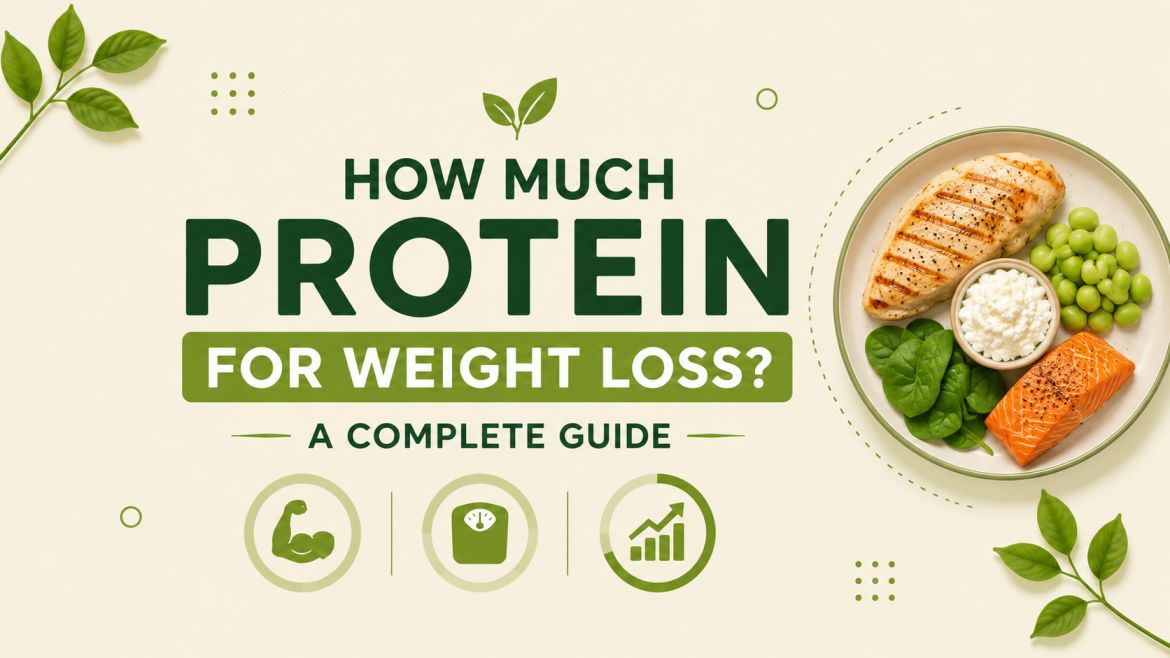
How much protein for weight loss is the most searched nutrition question among people in a calorie deficit. The answer is 1.6 to 2.2 grams of protein per kilogram and 0.73 to 1.0 grams of protein per pound of body weight per day. Eating at this level of protein intake for fat loss reduces muscle catabolism during caloric restriction by 80% compared to low-protein diets, based on research published in the American Journal of Clinical Nutrition.
Protein does not cause fat loss directly. A calorie deficit causes fat loss. Does protein help you lose weight? Yes, by determining whether the weight lost comes primarily from fat or from a mix of fat and muscle. Without adequate protein, up to 25 to 30% of weight lost during a deficit is lean mass rather than body fat, which lowers BMR and makes long-term weight maintenance harder.
For context on the calorie deficit that makes fat loss possible, start with the TDEE Calculator for Weight Loss and the full weight loss nutrition guide.
How Much Protein Per Day to Lose Weight?
The grams of protein per day to lose weight effectively is determined by body weight and training status. Protein per kg body weight for fat loss ranges from 1.2 g/kg for sedentary adults to 2.2 g/kg for those lifting weights in a deficit. Current evidence identifies 1.6 to 2.2 g/kg body weight per day as the range that preserves lean mass during a calorie deficit for most adults.
Research published in NASM Fitness Journal supports the upper end of this range (2.0 to 2.2 g/kg) for individuals who train with weights during their deficit phase. Protein targets by body weight and training status:
Body Weight | Sedentary (1.2 g/kg) | Active (1.8 g/kg) | Lifting (2.2 g/kg) |
|---|---|---|---|
60 kg (132 lbs) | 72 g/day | 108 g/day | 132 g/day |
75 kg (165 lbs) | 90 g/day | 135 g/day | 165 g/day |
90 kg (198 lbs) | 108 g/day | 162 g/day | 198 g/day |
110 kg (242 lbs) | 132 g/day | 198 g/day | 242 g/day |
For individuals with obesity (BMI above 30), protein targets based on goal body weight rather than current weight produce more practical targets. A 100 kg person with a goal weight of 80 kg uses 80 kg as the reference, producing a target of 128 to 176 g/day rather than 160 to 220 g/day.
Why Is Protein Important for Weight Loss?
Protein performs 5 roles during weight loss that directly affect fat loss outcomes and body composition.
1. Muscle Preservation During Caloric Restriction
Muscle tissue is metabolically expensive, the body catabolizes it for fuel during a calorie deficit unless protein intake prevents this. A direct comparison study found that participants eating 1.0 g/kg protein lost 1.6 kg of muscle in 4 weeks on a deficit, while those eating 2.3 g/kg lost only 0.3 kg. Preserving muscle mass maintains a higher BMR throughout the diet.
2. Higher Thermic Effect Compared to Other Macros
The thermic effect of protein during weight loss is a meaningful calorie advantage. The thermic effect of food (TEF) is the energy cost of digesting and metabolizing nutrients. Protein has a TEF of 20 to 30%, meaning 100 grams of protein providing 400 calories costs 80 to 120 calories to process. Carbohydrates have a TEF of 5 to 10%, and fat has a TEF of 0 to 3%. A 150 g/day protein intake burns an additional 80 to 150 calories per day compared to an equal-calorie intake of carbohydrates.
3. Satiety and Appetite Suppression
Protein is the most satiating macronutrient. High protein intake increases production of satiety hormones peptide YY and GLP-1, while reducing ghrelin (the primary hunger-signaling hormone). A landmark 2005 study in the American Journal of Clinical Nutrition found that increasing protein from 15% to 30% of calories reduced spontaneous daily food intake by 441 calories per day in participants with no explicit instruction to restrict eating.
4. Prevention of Metabolic Adaptation
Prolonged calorie restriction reduces TDEE through metabolic adaptation. High protein intake partially offsets this by maintaining lean mass (muscle tissue is responsible for approximately 20% of resting metabolic rate). A 2012 JAMA study found that very low-protein diets reduced total energy expenditure by 423 calories more per day compared to high-protein diets over a 4-week period.
5. Improved Body Composition at Goal Weight
People who lose weight on high-protein diets arrive at goal weight with a higher percentage of lean mass than those who lost the same total pounds on low-protein diets. This results in a lower body fat percentage, better strength, and improved long-term weight maintenance.
What Is the Best Protein Source for Weight Loss?
High-quality protein sources for weight loss share three characteristics: complete amino acid profiles, high leucine content (the primary muscle protein synthesis trigger), and low calorie density relative to protein content.
Best animal protein sources:
Chicken breast: 31 g protein per 100 g cooked, 165 kcal. Highest protein-to-calorie ratio of common meats.
Eggs: 13 g protein per 2 large eggs, 140 kcal. Complete amino acid profile with high leucine content.
Greek yogurt (0% fat): 17 g protein per 170 g, 100 kcal. High casein content supports overnight muscle protein synthesis.
Cottage cheese: 14 g protein per 100 g, 72 kcal. Primarily casein protein; high satiety per calorie.
Salmon: 25 g protein per 100 g cooked, 182 kcal. Additional omega-3 fatty acids reduce muscle protein breakdown.
Tuna (canned, water-packed): 26 g protein per 100 g, 100 kcal. Most cost-effective high-protein option.
Best plant protein sources:
Lentils: 9 g protein per 100 g cooked, 116 kcal. High fiber content increases satiety significantly.
Edamame: 11 g protein per 100 g cooked, 122 kcal. Complete protein with all essential amino acids.
Tofu (firm): 8 g protein per 100 g, 76 kcal. Versatile; absorbs flavors from cooking.
Tempeh: 19 g protein per 100 g, 193 kcal. Highest plant protein density with fermentation benefits.
Black beans: 9 g protein per 100 g cooked, 132 kcal. Combined with rice, forms a complete protein.
Plant proteins are lower in leucine than animal proteins. Individuals relying primarily on plant sources should target the upper end of the protein range (2.0 to 2.4 g/kg) to account for lower biological value.
How to Distribute Protein Intake Throughout the Day?
Per-meal protein distribution affects muscle protein synthesis (MPS) more than total daily protein alone. Research published in the Journal of Nutrition (2014) found that spreading protein across 3 to 4 meals with 30 to 40 g per meal stimulated MPS 25% more than eating the same total protein in a skewed distribution (low breakfast, high dinner).
Practical protein distribution for a 150 g/day target:
Breakfast: 35 to 40 g protein
Lunch: 40 to 45 g protein
Dinner: 40 to 45 g protein
Snack (optional): 20 to 25 g protein
The minimum threshold for triggering MPS is approximately 20 to 30 g of protein per meal, based on a dose-response study by Moore et al. (2009). Meals with less than 20 g protein do not maximally stimulate muscle repair and synthesis. This is the rationale for front-loading each meal with a complete protein source before adding carbohydrates and fat.
High-Protein Low-Calorie Foods for Fat Loss
High protein low calorie foods make hitting your protein goal for cutting body fat much easier. Each meal below delivers 30 to 50 g of protein while staying under 500 calories, keeping the daily calorie budget intact during a fat loss phase:
Meal | Protein | Calories |
|---|---|---|
200 g chicken breast + 200 g broccoli + 1 tbsp olive oil | 50 g | 380 kcal |
3 eggs + 100 g smoked salmon + leafy greens | 42 g | 370 kcal |
170 g Greek yogurt + 30 g protein powder + 100 g berries | 50 g | 310 kcal |
200 g cottage cheese + 100 g cucumber + 1 rice cake | 30 g | 240 kcal |
150 g tempeh + 200 g mixed vegetables + 2 tbsp tahini | 38 g | 450 kcal |
200 g tuna + 100 g edamame + salad greens + lemon | 45 g | 330 kcal |
These meals fit within a 1,500 to 1,800 calorie daily target while meeting 30 to 35% of a 150 g protein goal per meal.
Protein Timing for Fat Loss
Protein timing for fat loss matters for body composition optimization but is secondary to total daily protein intake. The 2022 International Society of Sports Nutrition position stand concluded that total daily protein is more important than timing for individuals in a calorie deficit who are not competing athletes.
A high protein diet for weight loss that spreads intake evenly across meals outperforms the same total protein eaten in 1 to 2 large meals. Three timing protocols with supporting evidence:
Pre-sleep protein (30-40 g casein or cottage cheese): A 2012 study in Medicine and Science in Sports and Exercise found that 40 g of casein before sleep increased overnight MPS by 22% and resting energy expenditure by 10% the following morning.
Post-workout protein (within 2 hours): Muscle protein synthesis rates peak within 2 hours of resistance training. A 30 to 40 g protein dose in this window produces superior muscle retention outcomes versus waiting 4+ hours.
Breakfast protein (30+ g): Studies show that a protein-rich breakfast (35 to 40 g) reduces total daily calorie intake by 175 to 200 calories compared to low-protein breakfasts, by controlling ghrelin for most of the morning.
Can You Eat Too Much Protein While Losing Weight?
Very high protein intakes (above 3.5 g/kg body weight) are not harmful for healthy adults with normal kidney function, based on a complete review in the Journal of the International Society of Sports Nutrition. Common concerns about high protein intake and kidney damage apply only to individuals with pre-existing kidney disease.
Practical upper limits exist not for health reasons but calorie reasons. At 4 calories per gram, very high protein intakes consume a disproportionate share of a calorie-restricted budget, leaving insufficient room for carbohydrates needed to fuel training and fat needed for hormone production.
The practical ceiling for most individuals is 2.4 to 2.7 g/kg body weight per day. Above this level, research shows no additional benefit to muscle protein synthesis or fat loss outcomes.
Protein Supplements for Weight Loss
Protein supplements are not required for weight loss. They are a practical tool for meeting daily protein targets when whole food sources are inconvenient or insufficient.
Best-evidenced options:
Whey protein isolate: 25 to 27 g protein per 30 g scoop, approximately 120 kcal. Highest biological value of common supplements. Fast-digesting; best used post-workout or to bridge protein gaps in meals.
Casein protein: 23 to 25 g protein per 30 g scoop. Slow-digesting; best used before sleep to support overnight muscle protein synthesis.
Pea protein isolate: 21 to 24 g protein per 30 g scoop. Plant-based; lower leucine content than whey but adequate when daily targets are met.
Protein powder contributes to the food calorie count and should be logged as a regular food source. Some products contain added sugars or fillers that increase calorie content significantly above the stated protein calories.
Protein targets for how much protein for weight loss interact with both macros and total calorie intake, which are covered in full in the macros for weight loss guide.
Frequently Asked Questions About Protein and Weight Loss
How Much Protein Should I Eat Per Day to Lose Weight?
The evidence-supported target for adults in a calorie deficit is 1.6 to 2.2 grams of protein per kilogram of body weight per day. For a 75 kg (165 lb) person, that is 120 to 165 grams daily. NASM recommends the higher end of this range (2.0 to 2.2 g/kg) for people who train with weights during their fat loss phase. The US Recommended Daily Allowance of 0.8 g/kg is the minimum to prevent deficiency, it does not reflect the amount needed to preserve muscle during weight loss.
What Protein Foods Are Best for Losing Weight?
The best protein sources for weight loss combine high protein density with low calorie density. The top options are chicken breast (31 g protein per 100 g cooked, 165 kcal), canned tuna in water (26 g per 100 g, 100 kcal), 0% Greek yogurt (17 g per 170 g, 100 kcal), cottage cheese (14 g per 100 g, 72 kcal), eggs (13 g per 2 eggs, 140 kcal), and lentils (9 g per 100 g cooked, 116 kcal). These foods fill a large portion of the daily protein target while using a small share of the calorie budget.
Can Too Much Protein Stall Weight Loss?
High protein intake does not cause weight loss stalls. If the scale is not moving, the cause is almost always a calorie surplus (eating more than TDEE), inaccurate food tracking, water retention, or metabolic adaptation, not protein intake. Protein at 30 to 40% of total calories is within the range where its thermic effect actually increases total daily calorie burn by 50 to 100 calories. The only scenario where protein excess affects fat loss is when protein calories displace calories that could have been carbohydrates needed for high-intensity training performance, reducing the quality and volume of exercise.
Does Protein Powder Help With Weight Loss?
Protein powder produces the same fat loss and muscle retention outcomes as equivalent protein from whole food sources. Its value is purely practical: it provides 25 to 27 grams of protein in under 2 minutes with minimal calorie cost (approximately 120 kcal per scoop of whey isolate).
Research does not show that protein supplements produce superior results to whole food protein at matched intakes. The choice between supplements and whole foods should depend on which approach makes hitting the daily protein target easier and more consistent.
Should I Eat Protein Before or After a Workout for Fat Loss?
Total daily protein intake matters more than timing for fat loss specifically. For body composition optimization, consuming 30 to 40 grams of protein within 2 hours post-workout is supported by research as the window where muscle protein synthesis rates are elevated.
A 2012 study found pre-sleep casein protein (cottage cheese or casein powder) increased overnight MPS by 22% and raised resting energy expenditure the following morning. Both windows are useful, but neither replaces the importance of consistently hitting the daily total.
Is Plant Protein as Effective as Animal Protein for Weight Loss?
Plant proteins are effective for fat loss and muscle retention, but require higher total intake to match the leucine content and biological value of animal proteins. Leucine is the primary trigger for muscle protein synthesis (MPS), and most plant proteins have lower leucine density. Individuals relying on plant proteins should target 10 to 15% more total protein than the standard 1.6 to 2.2 g/kg recommendation to account for lower biological availability.
Combining complementary plant proteins (rice and peas, or beans and rice) throughout the day addresses the incomplete amino acid profiles of individual plant sources.