
Perimenopause Weight Gain: Why It Happens?
Perimenopause weight gain isn't always about the scale number changing. Research shows the rate of fat mass gain nearly doubles during this transition while lean mass simultaneously declines, sometimes with little change in total weight. This guide covers why that happens and what actually helps.

Your body has a number. Let's find it.
We calculate the exact calorie target your body needs, built from your stats and goal, then track everything against it daily. Log meals, add workouts, set a weight goal, and watch your numbers update in real time. Check in weekly to see calories, water, and weight trend in one place.
No spreadsheets. No guessing. Just results.
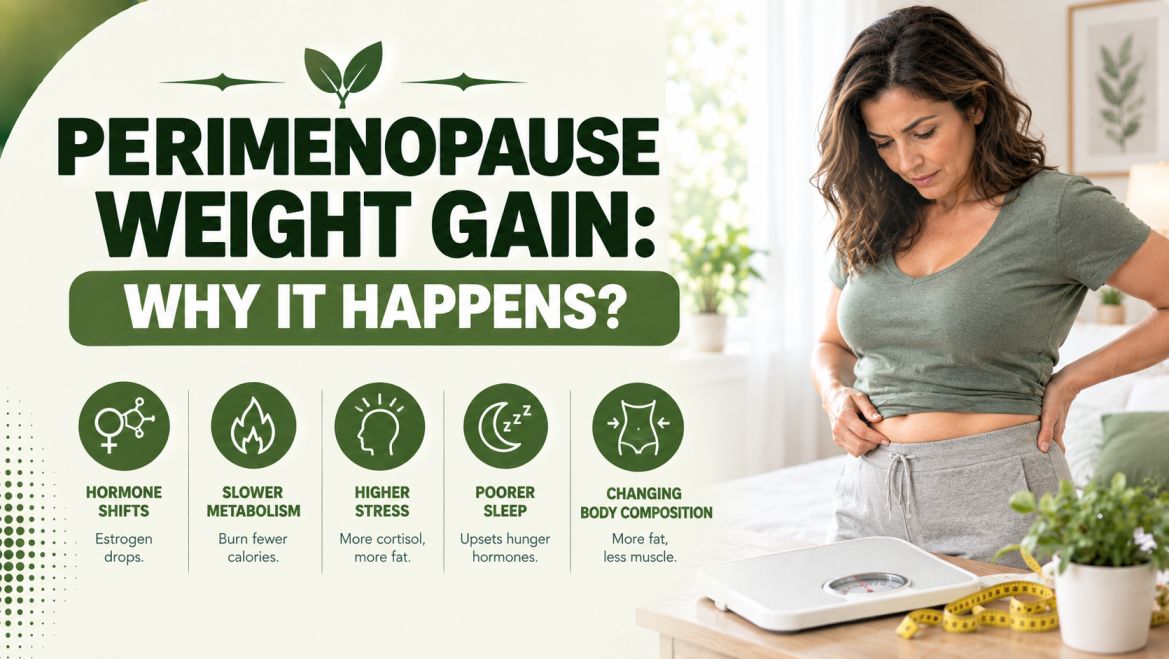
Perimenopause weight gain affects an estimated 50 to 70% of women during this transition. The honest research paints a more nuanced picture than simple metabolic slowdown.
Run the TDEE calculator for menopause to get a stage-adjusted starting point, since standard formulas often miss the composition shift covered throughout this guide.
This guide covers what the research actually shows about weight change during perimenopause and why it often feels sudden even without behavior change. It also covers what genuinely helps manage it.
Roughly 1.3 million women reach menopause in the United States annually, with most spending several years in the perimenopausal transition beforehand. Weight change during that window ranks among the most frequently searched and least clearly explained symptoms of this life stage.
How Common Is Perimenopause Weight Gain?
Weight gain during this transition is common enough to be considered a near-universal experience, not an unusual complication affecting only some women.
Between 50 and 70% of women report weight gain during this transition. Average total gain reaches roughly 10 kilograms, or 22 pounds, by the time menopause is fully established. Most of that gain concentrates around the abdomen rather than distributing evenly.
Does Perimenopause Change How Much Weight You Gain, or What That Weight Is Made Of?
This distinction matters more than most content on this topic acknowledges, and getting it right changes how the whole experience should be interpreted.
What Does the Research Show on Total Weight?
A widely cited academic review examined SWAN cohort data on this exact question. It found average weight gain of 2.1 kg over 3 years in women aged 42 to 52, roughly 1.5 pounds annually.
The same review concluded this gain was not clearly linked to menopausal status itself. General aging may explain much of it rather than the hormonal transition specifically.
What Does It Show on Body Composition Specifically?
Body composition tells a different, more specific story than total weight alone. SWAN longitudinal data found the rate of fat mass gain roughly doubles around the final menstrual period. It rises from approximately 1% to 1.7% per year over that two-year window.
Measure | Pattern Found |
|---|---|
Total Body Weight | Average gain not clearly tied to menopausal status specifically |
Fat Mass Gain Rate | Roughly doubles around the transition (1% to 1.7% annually) |
Lean Mass | Declines over the same window fat mass accelerates |
This is why the scale can feel misleading during this transition. Total weight may barely move while the composition underneath shifts substantially, more fat, less muscle, which explains changing clothing fit and shape even without a dramatic number on the scale.
Does This Timing Follow a Predictable Pattern?
The accelerated fat gain and lean mass decline documented in SWAN data clusters specifically around the final menstrual period. It begins roughly two years before and continues for about eighteen months afterward.
This timeline matters for setting realistic expectations. The most rapid composition change concentrates in a specific multi-year window rather than spreading evenly across the entire perimenopausal transition, which can last considerably longer overall.
Why Does Fat Concentrate in the Abdomen During This Transition?
Two mechanisms work together to redirect fat storage toward the midsection specifically, rather than distributing gain evenly across the body.
Declining estrogen reduces activity of estrogen receptor-alpha, a receptor that is metabolically more active than other estrogen receptor types. Its downregulation independently increases fat accumulation. Separately, declining estrogen promotes insulin resistance, and cells with impaired insulin sensitivity preferentially store incoming glucose as fat, particularly around the abdomen.
This composition shift compounds itself over time. Since muscle burns substantially more energy per pound than fat at rest, the lean mass decline covered above further slows resting energy expenditure, making the same eating pattern produce more fat gain than it would have earlier.
Can Hormone Swings Cause Sudden Short-Term Weight Changes?
Beyond the gradual pattern covered above, perimenopause specifically produces a second kind of weight change many women describe as sudden and confusing.
FSH surges during perimenopause drive estradiol swings that can range 200 to 400% within a single menstrual cycle. These hormonal spikes can produce 5 to 8 pound shifts over just a few weeks, largely reflecting water retention rather than actual fat gained.
This mechanical, hormone-driven pattern explains a common complaint: "I gained 7 pounds in three weeks and nothing changed." The fluctuating hormone pattern driving this specific experience is covered in more depth in the perimenopause vs menopause guide, which explains why this volatility is unique to this particular stage.
Does Poor Sleep Drive Additional Weight Gain?
Sleep disruption connects to weight gain through a pathway separate from the direct hormonal mechanisms already covered, and it deserves its own attention.
Vasomotor symptoms, hot flashes and night sweats, affect more than 80% of women during this transition and directly disrupt sleep quality. Research using SWAN data found an association between vasomotor symptom frequency and weight gain specifically.
Poor sleep quality itself increased vasomotor symptom frequency by roughly 7 to 16% in the same research, creating a cycle where disrupted sleep worsens symptoms, which further disrupts sleep. The specific signs that indicate sleep and symptom patterns tied to this transition, versus other causes, are covered in the perimenopause metabolism signs guide.
Does Poor Sleep Change Eating Behavior Too?
Circadian rhythm disruption from fragmented sleep has been linked to skipping breakfast, increased snacking, more frequent fast food consumption, and eating until uncomfortably full.
These behavioral shifts operate independently of willpower. They reflect a genuine physiological disruption to hunger and satiety signaling, not a simple lapse in discipline, which is worth naming plainly given how often this gets framed as a personal failing.
Does Duration of Symptoms Vary Between Women?
Vasomotor symptoms last a median of 7.4 years overall, though this varies considerably by group. African American women have been found to experience the longest median duration, at 10.1 years. Women whose symptoms begin after menopause rather than during perimenopause tend to experience the shortest duration.
This variation matters for setting realistic expectations around how long the sleep-weight connection might persist. A longer symptom duration means a longer window where this particular mechanism stays relevant to weight management specifically.
How Do You Manage Weight Gain During This Transition?
Understanding the mechanism changes the practical approach, since composition-focused strategies matter more here than chasing total weight alone.
What Should Your Calorie Target Reflect?
A calculator accounting for the reduced energy expenditure documented across this transition works better than assuming a fixed number throughout.
The full breakdown of how this adjustment works, and how it differs from a generic weight-loss calculation, sits in the full menopause and TDEE guide.
Life stage confirmation does not need to happen before starting, since the number itself can be refined as symptoms and cycle patterns clarify things.
Anyone still uncertain can start with the general TDEE calculator for women instead.
Does Protein Matter More Here?
Lean mass decline happens independent of diet during this transition. Protein intake carries added importance for preserving whatever muscle remains and supporting whatever rebuilding is still possible.
Does Resistance Training Matter More Here?
Resistance training directly counters the lean mass decline driving much of the composition shift covered throughout this guide, working alongside diet rather than replacing it.
Strategy | Why It Matters Specifically Here |
|---|---|
Accurate Calorie Target | Standard formulas miss the documented reduction in energy expenditure |
Higher Protein Intake | Counters accelerated lean mass decline during this window |
Resistance Training | Directly targets the muscle loss driving slower resting energy use |
Consistent Weekly Tracking | Filters out the water-retention swings covered earlier |
None of these strategies work in isolation. Diet determines whether a deficit exists at all, while resistance training and protein together determine what gets preserved or lost within that deficit.
How Should Progress Actually Be Tracked?
Water-retention swings covered earlier in this guide make single-day readings unreliable. A weekly average provides a far more reliable signal, particularly during the more volatile perimenopausal window.
Waist circumference adds a second useful data point beyond weight alone. Since composition change concentrates around the midsection, tracking this measurement alongside weekly weight often reveals progress the scale number misses entirely.
Strength progress in resistance training sessions offers a third signal worth watching. Lean mass preservation is a primary goal during this transition. Maintained or improved strength suggests the overall approach is working, even during weeks the scale barely moves.
When Should You Be Concerned About Something Beyond Perimenopause?
Most weight change during this transition follows the gradual and fluctuating patterns already covered, but certain patterns warrant medical evaluation beyond the transition itself.
A sudden gain of 15 or more pounds within 3 months falls outside the typical pattern documented in this guide
Steady gain of 3 or more pounds monthly sustained over 6 months deserves evaluation beyond normal transition-related change
Weight gain paired with fatigue, cold intolerance, or facial rounding can point toward thyroid dysfunction or other conditions requiring separate diagnosis
None of this is meant to cause alarm over normal transition symptoms. It exists to flag the specific patterns that fall outside what current research documents as typical, where a doctor's evaluation adds real value beyond what this guide alone can address.
What Common Mistakes Make This Harder to Manage?
A handful of predictable responses to perimenopause weight gain tend to make the underlying problem worse rather than better.
Do You Blame Willpower for a Physiological Shift?
Attributing composition change entirely to reduced discipline misses the documented hormonal and metabolic shifts actually driving it. This often leads to increasingly restrictive approaches that fail for reasons unrelated to effort.
Do You Chase Total Weight While Ignoring Composition?
Focusing exclusively on scale weight misses the signal that actually indicates whether an approach is working. Research shows composition change is the more consistently documented pattern here.
Mistake | Why It Backfires | The Fix |
|---|---|---|
Blaming Willpower | Ignores documented hormonal and metabolic mechanisms | Address composition through protein and resistance training |
Chasing Total Weight Only | Misses the more relevant composition shift | Track waist measurement and strength alongside weight |
Reacting to Water-Weight Swings | FSH-driven fluctuations are not fat gained or lost | Use weekly averages, not single readings |
Ignoring Sleep and Symptoms | Sleep disruption compounds the hormonal pathway directly | Address vasomotor symptoms as part of the overall strategy |
The pattern across these mistakes is treating this transition like an ordinary weight-loss situation. The mechanisms covered throughout this guide are specific enough to warrant a specific approach, not a generic one borrowed from unrelated contexts.
Frequently Asked Questions About Perimenopause Weight Gain
How Much Weight Do Women Typically Gain During Perimenopause?
Average total gain reaches roughly 10 kilograms, or 22 pounds, by the time menopause is fully established. Total weight change specifically has not been clearly linked to menopausal status in all research. Body composition change, more fat and less muscle, shows a clearer connection to the transition itself.
Why Does My Weight Fluctuate So Much Week to Week During Perimenopause?
FSH-driven estradiol swings within a single cycle can produce 5 to 8 pound shifts over a few weeks, largely from water retention rather than fat. This mechanical pattern is specific to perimenopause's hormonal volatility rather than reflecting anything about diet or exercise consistency.
Does Perimenopause Weight Gain Mean My Metabolism Is Broken?
No. Declining estrogen and the resulting lean mass loss genuinely reduce resting energy expenditure, but this reflects a documented physiological shift, not permanent metabolic damage. Resistance training and adequate protein can meaningfully offset this decline.
Is It Normal for Weight to Concentrate in My Stomach Specifically?
Yes. Estrogen receptor downregulation and increased insulin resistance both independently promote abdominal fat storage during this transition. This is a well-documented pattern distinct from weight gain distributed evenly across the body.
Can Better Sleep Actually Reduce Weight Gain During Perimenopause?
Research has found an association between vasomotor symptom frequency, sleep quality, and weight gain, though this represents one contributing factor rather than a complete explanation. Improving sleep quality may help through both the hormonal and behavioral pathways covered in this guide.
Should I Expect This to Get Worse Before It Gets Better?
Research indicates fat mass gain accelerates specifically in the two years surrounding the final menstrual period, then the rate of change moderates afterward. The most rapid composition shift tends to cluster around that specific window rather than continuing to accelerate indefinitely.
Does Exercise Alone Fix This Without Changing My Diet?
Exercise, particularly resistance training, addresses the muscle loss component directly, but it does not replace the need for an accurately calculated calorie target. Both levers address different pieces of the same overall picture.
How Do I Know If I'm Actually in Perimenopause or Just Getting Older?
Cycle irregularity remains the clearest marker, though metabolic and composition changes have been documented beginning before cycles become obviously irregular in some research. Tracking symptom patterns alongside cycle changes gives a clearer picture than either signal alone.
Does Ethnicity Affect How Long Weight-Related Symptoms Last?
Yes. Research has found African American women experience the longest median duration of vasomotor symptoms, at 10.1 years. Other groups studied showed shorter durations by comparison.
Can Medication Help With Perimenopause Weight Gain Directly?
This falls outside the scope of this guide's calorie and lifestyle focus. Hormone therapy and other medical interventions address different aspects of this transition. A direct conversation with a doctor familiar with your specific symptom profile is the right next step.
Is There a Specific Window When Weight Management Efforts Work Best?
The two years surrounding the final menstrual period show the most rapid documented composition change. Consistent tracking during that specific window may be more valuable than waiting until symptoms feel fully established.