
Calories Burned Treading Water By Duration, Weight and Intensity
How many calories does treading water burn? Full tables by body weight and intensity. Covers MET values, 30-minute estimates, treading water vs swimming laps, and weight loss calories.

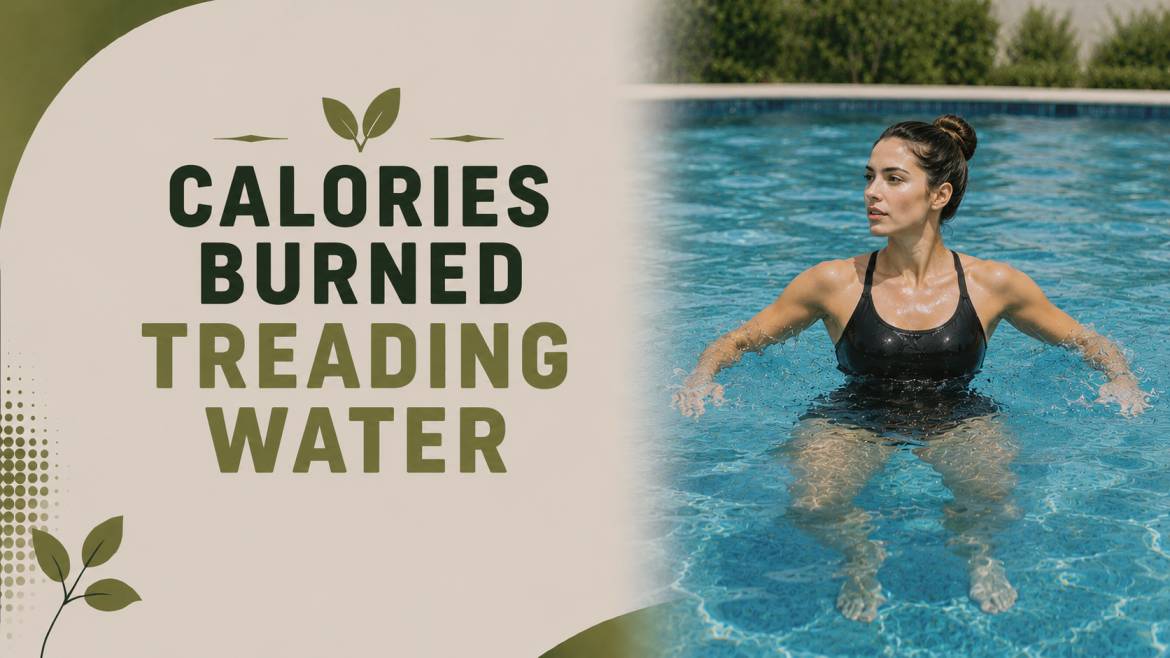
Treading water burns approximately 245 calories per hour for a 154 lb (70 kg) person at moderate effort, based on the MET value of 3.5 from the 2024 Adult Compendium of Physical Activities. With vigorous effort, treading water can reach a MET of 8.0, burning approximately 560 calories per hour for the same swimmer. This vigorous end of the range places intense treading water in the same calorie output band as moderate freestyle swimming.
For a personalised treading water calorie estimate, the swimming calorie calculator applies the MET formula against your body weight and effort level. The swimming calories hub covers all aquatic activity formats, from treading water to competitive strokes.
Treading water is a fundamental aquatic skill and a valid low-impact exercise format. It is used in survival swimming training, water polo conditioning, rehabilitation programmes, and as an active recovery format between hard swimming intervals. Its calorie output per hour at moderate effort is comparable to a brisk walk, making it accessible for non-swimmers and swimmers recovering from upper-body injuries.
How Many Calories Does Treading Water Burn Per Hour?
Treading water calorie output per hour depends on effort intensity and body weight. The 2024 Compendium records two MET values for treading water: 3.5 for moderate effort and 8.0 for vigorous effort. This produces a 2.3x calorie difference per hour for the same swimmer.
Treading Water Calories Per Hour by Body Weight
Body Weight | Moderate (MET 3.5) | Vigorous (MET 8.0) |
|---|---|---|
120 lb (54 kg) | 189 kcal | 432 kcal |
140 lb (64 kg) | 224 kcal | 512 kcal |
150 lb (68 kg) | 238 kcal | 544 kcal |
154 lb (70 kg) | 245 kcal | 560 kcal |
165 lb (75 kg) | 263 kcal | 600 kcal |
185 lb (84 kg) | 294 kcal | 672 kcal |
200 lb (91 kg) | 319 kcal | 728 kcal |
215 lb (97 kg) | 340 kcal | 776 kcal |
Source: 2024 Adult Compendium of Physical Activities.
Vigorous treading water calorie burn at 185 pounds reaches 672 calories per hour. This equals moderate freestyle swimming (MET 7.0) for the same body weight at 588 kcal/hr, and slightly exceeds it at the 200 lb weight point. Intense treading water is not a low-intensity activity.
Treading Water MET Value: What the Research Shows
The Metabolic Equivalent of Task (MET) is the standardised measure of exercise energy cost relative to seated rest (1 MET). The 2024 Compendium assigns treading water the following MET values:
Treading Water Intensity | MET | Context |
|---|---|---|
Moderate effort | 3.5 | Relaxed kick, arms sculling, sustainable indefinitely |
Vigorous effort | 8.0 | Hard kick, fast arm movement, breathing elevated |
A moderate MET of 3.5 places treading water between slow walking (MET 2.5) and brisk walking (MET 4.3) in terms of energy demand. A vigorous MET of 8.0 places intense treading water at the same level as moderate freestyle swimming.
The difference between moderate and vigorous treading water lies primarily in kick frequency and arm action intensity. Moderate treading uses a slow eggbeater or flutter kick with relaxed arm sculling. Vigorous treading uses rapid, continuous leg movement and active arm pushing, elevating heart rate to near-maximal levels.
How Many Calories Does Treading Water Burn in 30 Minutes?
Treading water calories burned in 30 minutes range from 119 to 280 kcal depending on body weight and effort level for most adults.
Treading Water 30-Minute Calories by Body Weight
Body Weight | Moderate (MET 3.5) | Vigorous (MET 8.0) |
|---|---|---|
120 lb (54 kg) | 95 kcal | 216 kcal |
150 lb (68 kg) | 119 kcal | 272 kcal |
154 lb (70 kg) | 123 kcal | 280 kcal |
185 lb (84 kg) | 147 kcal | 336 kcal |
215 lb (97 kg) | 170 kcal | 388 kcal |
Calories burned treading water 30 minutes at moderate effort for a 154 lb person: approximately 123 kcal. At vigorous effort the same person burns 280 kcal in the same 30 minutes, exceeding 30-minute moderate backstroke (168 kcal) and approaching 30-minute moderate freestyle (245 kcal).
Treading Water vs Swimming Laps: Calorie Comparison
Treading water at moderate effort burns fewer calories than lap swimming at most strokes, but vigorous treading water competes directly with moderate lap swimming.
Treading Water vs Swimming Laps (154 lb / 70 kg, Per Hour)
Activity | MET | Calories Per Hour |
|---|---|---|
Treading water (moderate) | 3.5 | 245 kcal |
Backstroke | 4.8 | 336 kcal |
Breaststroke (moderate) | 5.3 | 371 kcal |
Treading water (vigorous) | 8.0 | 560 kcal |
Freestyle (moderate) | 7.0 | 490 kcal |
Freestyle (vigorous) | 9.8 | 686 kcal |
Source: 2024 Adult Compendium of Physical Activities.
Moderate treading water burns 245 kcal/hr versus backstroke's 336 kcal/hr. Vigorous treading water at 560 kcal/hr exceeds moderate freestyle at 490 kcal/hr for the same body weight. The comparison shows that intensity level within an activity matters more than the activity type itself for determining calorie output.
For the full lap swimming calorie breakdown, see the swimming laps calories page.
Who Benefits Most from Treading Water as Exercise?
Treading water serves specific populations and training purposes where swimming laps is not possible or appropriate.
Rehabilitation and injury recovery: Treading water requires no arm stroke in moderate form, making it suitable for swimmers with shoulder injuries who still need cardiovascular conditioning. The buoyancy of water supports approximately 90% of body weight, removing joint stress from the lower body simultaneously.
Non-swimmers building water comfort: Treading water is often a first step toward lap swimming for adults learning to swim. At moderate effort it delivers 245 kcal/hr of exercise output while requiring only basic water survival skills, not stroke technique.
Active recovery between hard sets: Competitive and masters swimmers use treading water between hard interval sets to maintain movement and low calorie output during rest periods. This keeps the cardiovascular system active without adding fatigue that would compromise subsequent sets.
Water polo and survival swimming conditioning: Vigorous treading water, particularly using the eggbeater kick, is a primary conditioning drill for water polo players and lifeguards. At MET 8.0 it produces high cardiovascular demand and high calorie output from a stationary position.
Treading Water for Weight Loss
Treading water produces meaningful calorie output for weight loss when performed at vigorous effort or in sustained moderate sessions.
Weekly Treading Water Calorie Output (154 lb / 70 kg)
Sessions Per Week | Duration | Effort | Per Session | Weekly Total |
|---|---|---|---|---|
3 sessions | 30 min | Moderate | 123 kcal | 369 kcal |
5 sessions | 30 min | Moderate | 123 kcal | 615 kcal |
3 sessions | 30 min | Vigorous | 280 kcal | 840 kcal |
5 sessions | 30 min | Vigorous | 280 kcal | 1,400 kcal |
4 sessions | 60 min | Moderate | 245 kcal | 980 kcal |
Moderate treading water five days per week for 30 minutes produces 615 weekly calories, approximately 0.7 lb of monthly fat loss without dietary changes. Vigorous treading water at the same frequency and duration produces 1,400 weekly calories, approximately 1.6 lb of monthly fat loss.
The TDEE calculator shows how treading water sessions fit within your total daily energy balance. The calories burned calculator covers all activity types for weeks that combine treading water with land-based exercise.
Treading water produces the lowest calorie output among the swimming activities covered in this cluster. For higher calorie output with the same low-impact water environment, the 30-minute swimming calories page and breaststroke calories page cover more calorie-intensive aquatic options. For a complete guide across all swimming formats, the main calories burned guide provides cross-activity comparisons.
Treading Water as Part of a Swimming Programme
Treading water works best as one component within a mixed swimming programme rather than as a standalone calorie-burning exercise. Its role changes depending on the swimmer's goal.
Active Recovery Between Hard Sets
Between vigorous freestyle or breaststroke intervals, 60 to 90 seconds of moderate treading water keeps the swimmer moving and burns a small calorie increment (approximately 4 to 6 kcal per minute at 154 lb) during the rest interval. This is meaningfully better than hanging on the pool wall between sets, which reduces session calorie output to zero during rest periods.
Calorie Bridge for Non-Swimmers
Beginner swimmers who cannot yet sustain lap swimming for more than a few lengths can use 20 to 30 minutes of moderate treading water to accumulate 80 to 100 kcal while building water comfort. Over time, as lap swimming skill develops, they can replace treading water with progressively longer freestyle or breaststroke sessions.
Vigorous Treading Water Intervals
Alternating 30 seconds of vigorous eggbeater kick treading with 30 seconds of moderate treading creates an interval format that pushes effective session MET above the moderate 3.5 baseline. A 154 lb swimmer doing 10 rounds of this alternating interval in a 10-minute active window burns approximately 60 to 70 calories, comparable to a 10-minute moderate backstroke set.
For the full comparison of how treading water fits within the swimming calorie cluster, the 30-minute swimming calories page shows all strokes and activity types at equivalent duration. The 1-hour swimming calories page provides the full hourly range across strokes including treading water.
Treading Water Calorie Burn vs Land-Based Exercise
Treading water at moderate effort (MET 3.5) burns fewer calories per hour than most land-based cardio at moderate intensity. Comparing equivalent durations helps clarify where treading water fits in a mixed exercise programme.
Treading Water vs Walking and Cycling (154 lb / 70 kg, Per Hour)
Activity | MET | Calories Per Hour |
|---|---|---|
Slow walking (2 mph) | 2.5 | 175 kcal |
Treading water (moderate) | 3.5 | 245 kcal |
Brisk walking (3.5 mph) | 4.3 | 301 kcal |
Light cycling (10 mph) | 4.0 | 280 kcal |
Treading water (vigorous) | 8.0 | 560 kcal |
Moderate freestyle | 7.0 | 490 kcal |
Moderate treading water outperforms slow walking but falls short of brisk walking at MET 4.3. Vigorous treading water surpasses all common moderate-intensity land activities shown in the table. For an aquatic activity with no stroke technique requirements, vigorous treading water produces exceptional calorie output per hour.
This positions treading water as a useful option for:
People who cannot walk briskly due to lower-body pain or injury
Swimmers who want to stay in the water for social or recovery reasons between hard sets
Beginner exercisers who find any continuous effort in water more motivating than walking on land
Treading Water Techniques and Their Effect on Calorie Burn
Different treading water techniques produce different calorie outputs because they engage different muscle groups at different intensities.
Eggbeater Kick
The eggbeater kick alternates the legs in a circular rotation, similar to bicycle pedalling but with the knees tracking outward. It is the most efficient technique for sustained treading because it keeps the swimmer consistently elevated with less arm effort. Water polo players use the eggbeater kick to maintain position while freeing the arms for passing and shooting.
Eggbeater kick at moderate effort produces approximately the standard MET 3.5 calorie output. At vigorous water polo training pace, the kick frequency and intensity approach the MET 8.0 vigorous band.
Flutter Kick Treading
Flutter kick treading uses the same kick as backstroke and freestyle, applied vertically. It is less efficient than eggbeater kick for maintaining elevation, requiring more arm and core work to compensate. This additional muscle engagement slightly raises effective calorie output above equivalent eggbeater treading at the same perceived effort.
Sculling
Arm sculling supplements the leg kick by using figure-eight arm movements to generate upward lift. Heavy reliance on sculling rather than kicking reduces leg muscle engagement and lowers the effective MET compared to kick-dominant treading.
The practical calorie implication: eggbeater-dominant vigorous treading approaches the MET 8.0 ceiling, while sculling-heavy moderate treading sits closer to MET 3.0. Swimmers aiming to maximise treading water calorie output should prioritise vigorous eggbeater kick over arm-dominant techniques.
For the backstroke comparison at matched effort, see the backstroke calories page.
Frequently Asked Questions About Calories Burned Treading Water
How Many Calories Does Treading Water Burn?
Treading water burns approximately 245 calories per hour at moderate effort for a 154 lb (70 kg) person. At vigorous effort the same person burns approximately 560 calories per hour. The MET values are 3.5 for moderate treading and 8.0 for vigorous treading, sourced from the 2024 Adult Compendium of Physical Activities.
How Many Calories Does Treading Water Burn in 30 Minutes?
A 154 lb (70 kg) person burns approximately 123 calories in 30 minutes of moderate treading water. At vigorous effort the same person burns approximately 280 calories in 30 minutes. A 185 lb person at vigorous treading water burns approximately 336 calories per 30-minute session.
Does Treading Water Burn as Many Calories as Swimming Laps?
Moderate treading water burns fewer calories per hour than most lap swimming strokes. At moderate effort (MET 3.5), treading water produces 245 kcal/hr versus backstroke (MET 4.8) at 336 kcal/hr for a 154 lb swimmer. Vigorous treading water (MET 8.0) produces 560 kcal/hr, exceeding moderate freestyle (MET 7.0) at 490 kcal/hr for the same body weight.
Is Treading Water Good Exercise for Weight Loss?
Treading water contributes to weight loss through accumulated calorie output. Five 30-minute vigorous treading water sessions per week produces 1,400 weekly calories for a 154 lb swimmer, supporting approximately 1.6 lb of monthly fat loss without dietary changes. Moderate treading water at the same frequency produces 615 weekly calories, supporting approximately 0.7 lb of monthly fat loss.
How Many Calories Does Treading Water Burn Per Minute?
Moderate treading water burns approximately 4.1 calories per minute for a 154 lb (70 kg) person. Vigorous treading water burns approximately 9.3 calories per minute for the same person. A 185 lb person at moderate treading burns approximately 4.9 calories per minute.
The tables and calorie estimates on this page use MET values from the 2024 Adult Compendium of Physical Activities, the standard reference for exercise energy expenditure used by exercise physiologists and fitness researchers globally. All estimates represent active swim time only and do not include rest intervals between sets.