
How Should You Use Progress Photos to Track TDEE Results?
A scale cannot tell fat loss from muscle gain, but a consistent photo can. This guide covers the exact protocol that turns progress photos into real data instead of a random snapshot.

Your body has a number. Let's find it.
We calculate the exact calorie target your body needs, built from your stats and goal, then track everything against it daily. Log meals, add workouts, set a weight goal, and watch your numbers update in real time. Check in weekly to see calories, water, and weight trend in one place.
No spreadsheets. No guessing. Just results.
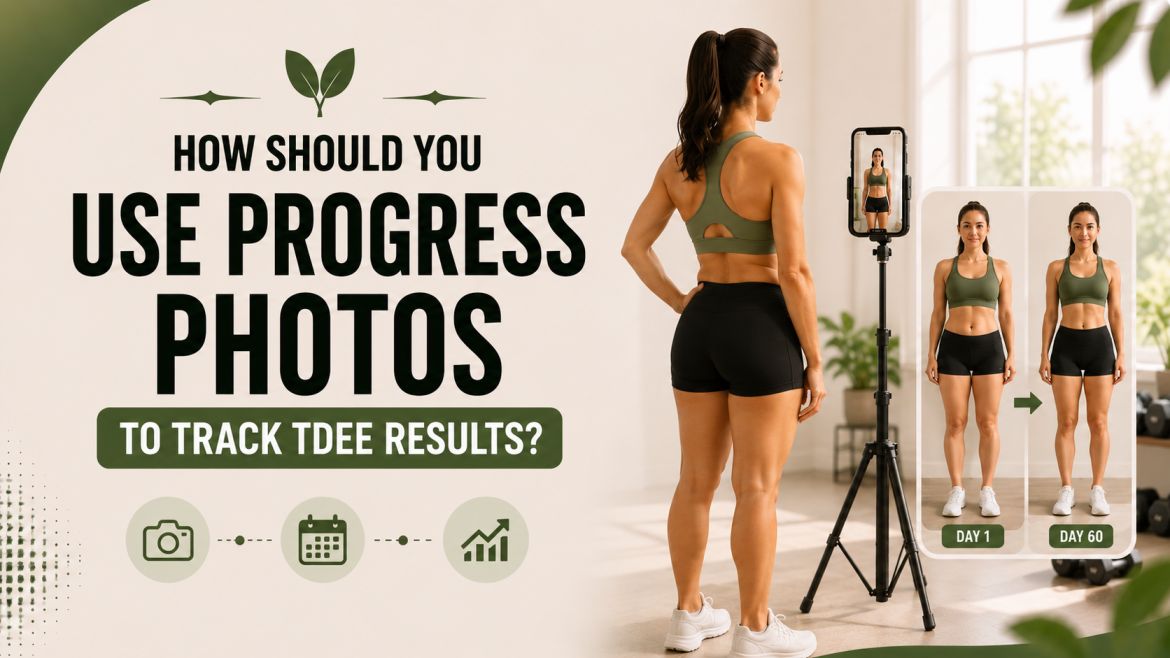
A scale has a blind spot. It cannot tell the difference between fat lost and muscle gained, so two people with identical weight trends can look completely different underneath that number.
Photos fill that gap when they are taken the right way. Weight tracking still matters, and the weekly weigh-in protocol covers how to read a trend correctly, but photos catch changes the scale physically cannot register.
This guide covers the standardized protocol that makes photos comparable session to session, the right interval for taking them, and exactly what they reveal that weight and TDEE tracking alone cannot.
Why Do Photos Show What the Scale Cannot?
Weight is one number covering fat, muscle, water, and gut content all at once. It cannot separate them, which means the scale stays flat during outcomes that are actually working exactly as planned.
Where this blind spot shows up most:
Body recomposition. Fat loss and muscle gain can offset each other almost perfectly, holding scale weight steady for weeks while the body visibly changes shape.
Water and glycogen swings. Daily weight moves 0.5 to 2.5 kg from sodium, carbs, and hormones alone, none of which shows up in a photo taken under consistent conditions.
Muscle density versus fat volume. A kilogram of muscle takes up meaningfully less space than a kilogram of fat, so waistlines and outlines shift before the scale reflects it.
Why this matters practically: anyone deliberately pursuing body recomposition needs photos specifically because the scale is designed to stay quiet during a successful recomp phase.
What Does a Standardized Photo Protocol Actually Require?
Consistency is the entire point. A photo taken under different lighting, at a different angle, or in different clothing is not a comparable data point, no matter how sharp the image is.
Element | Standard to Follow |
|---|---|
Time of day | First thing in the morning, before food or water |
Lighting | Same light source every time, natural light preferred |
Location | Same spot, same wall, same background |
Camera distance and height | Fixed distance, camera at roughly chest height |
Clothing | Same or similar fitted clothing, minimal and non-baggy |
Pose | Relaxed stance, arms at sides, neutral expression |
The practical takeaway: none of these individually matter that much. What matters is that every single one stays identical across sessions, since a single changed variable can create the illusion of progress or the illusion of a stall.
Which Angles Should You Actually Photograph?
Three angles, shot every session, give a complete enough picture without turning the process into a production. More angles add effort without adding much comparative value.
Front view. Shows overall shape, shoulder-to-waist proportion, and midsection change most directly.
Side view. Usually the first angle to show visible fat loss, since it reveals the profile of the midsection without the front view's clothing distortion.
Back view. Captures posture and upper-back changes that front and side angles miss entirely.
A relaxed pose should be the primary shot in all three, since it reflects a true baseline that is hard to unconsciously improve through flexing or posture adjustment.
How Often Should You Actually Take Progress Photos?
Weekly photos are too frequent to show anything meaningful, and daily photos are close to pointless. Real visible change happens on a timeline measured in weeks, not days.
Interval | What It Typically Shows |
|---|---|
1 to 2 weeks | Almost nothing beyond water retention and posture differences |
2 to 4 weeks | The first genuinely comparable interval for most people |
8 to 12 weeks | Clear, unmistakable visual change against the starting photo |
Why shorter intervals backfire: comparing photos taken a few days apart mostly captures lighting variance and water weight, not real tissue change. That comparison tends to feel discouraging for reasons that have nothing to do with actual progress.
The 2 to 4 week interval matches the practical pace of the weekly weigh-in trend closely enough that both can be reviewed together during the same check-in.
What Should You Actually Look for When Comparing Photos?
Side-by-side comparison against the very first photo, not the previous one, reveals change far more reliably. Week-to-week photos are too close together for the eye to register a meaningful difference.
What to scan for across a longer comparison window:
Waist and midsection outline, particularly from the side angle
Shoulder-to-waist taper and overall proportion
Muscle definition and separation, especially in the arms and legs
Posture changes, which often improve alongside fat loss and strength gains
What to ignore entirely: pump, bloat, and single-day water retention. A photo taken after a high-carb meal or a hard training session will look meaningfully different from one taken in a fasted, rested state, independent of any real progress.
How Do Photos Fit Alongside Weight and TDEE Tracking?
Photos are not a replacement for the numbers, they are the third data point that fills in what the other two cannot see. Weight trend confirms the deficit is working. Photos confirm what kind of tissue that deficit is actually removing.
How the three data points work together:
TDEE and calorie intake set the deficit or surplus driving the overall direction.
Weekly weigh-in trend confirms whether that direction is actually moving as planned.
Progress photos reveal whether the change is fat, muscle, or a combination the scale alone cannot separate.
A flat weekly weight trend alongside visibly changing photos is one of the clearest signs that recomposition is working correctly, even though the scale itself offers no evidence of it.
What Common Mistakes Ruin Photo Comparisons?
Changing lighting between sessions. Overhead lighting, side lighting, or a different room can create shadows that mimic or hide real definition.
Comparing photos taken at different times of day. Post-meal or post-workout photos carry water and food volume the morning baseline does not.
Switching clothing style between sessions. Baggy clothing in one photo and fitted clothing in the next makes any real comparison unreliable.
Reviewing photos too frequently. Checking every few days invites discouragement over normal water fluctuation rather than real progress.
Only taking photos when things are going well. Skipping sessions during a plateau removes exactly the data needed to see whether change is actually still happening underneath the stall.
Frequently Asked Questions
How Long Before Progress Photos Show Real Change?
Most people need 4 to 6 weeks of consistent photos before a visible difference appears clearly. Comparing the current photo against the very first one, rather than the most recent one, makes that change far easier to see.
Should You Take Progress Photos Flexed or Relaxed?
A relaxed pose should be the primary comparison shot, since it reflects a genuine baseline that is difficult to unconsciously improve. A single flexed shot can be added as a secondary reference for muscle definition specifically.
Can Progress Photos Replace Weighing In?
No. Photos and weight trend measure different things and work best combined, since photos cannot detect a stalled deficit the way a flat multi-week weight trend can. Each method catches something the other one misses.
Why Do I Look Different in the Morning Versus the Evening?
Food volume, water intake, and glycogen storage all shift appearance meaningfully across a single day. This is exactly why a fixed morning time, before eating or drinking, keeps photos genuinely comparable.
What if My Progress Photos Show No Change After a Month?
Check documentation consistency first, since a small lighting or clothing change can hide real progress that occurred. If conditions were consistent, compare against a longer interval, since 4 weeks is sometimes still too short for visible change in a slow, controlled deficit.
Do Progress Photos Work for Muscle Gain, Not Just Fat Loss?
Yes. The same standardized protocol reveals muscle growth and improved definition over time, using the identical lighting, angle, and interval principles used for fat loss tracking.