
Chronic Stress, Cortisol, and Your TDEE
Chronic stress raises cortisol, and sustained elevation changes both fat storage patterns and daily movement. Research from Yale found cortisol-reactive women accumulated significantly more abdominal fat independent of weight. This guide covers the mechanism and the interventions with real evidence behind them.

Your body has a number. Let's find it.
We calculate the exact calorie target your body needs, built from your stats and goal, then track everything against it daily. Log meals, add workouts, set a weight goal, and watch your numbers update in real time. Check in weekly to see calories, water, and weight trend in one place.
No spreadsheets. No guessing. Just results.
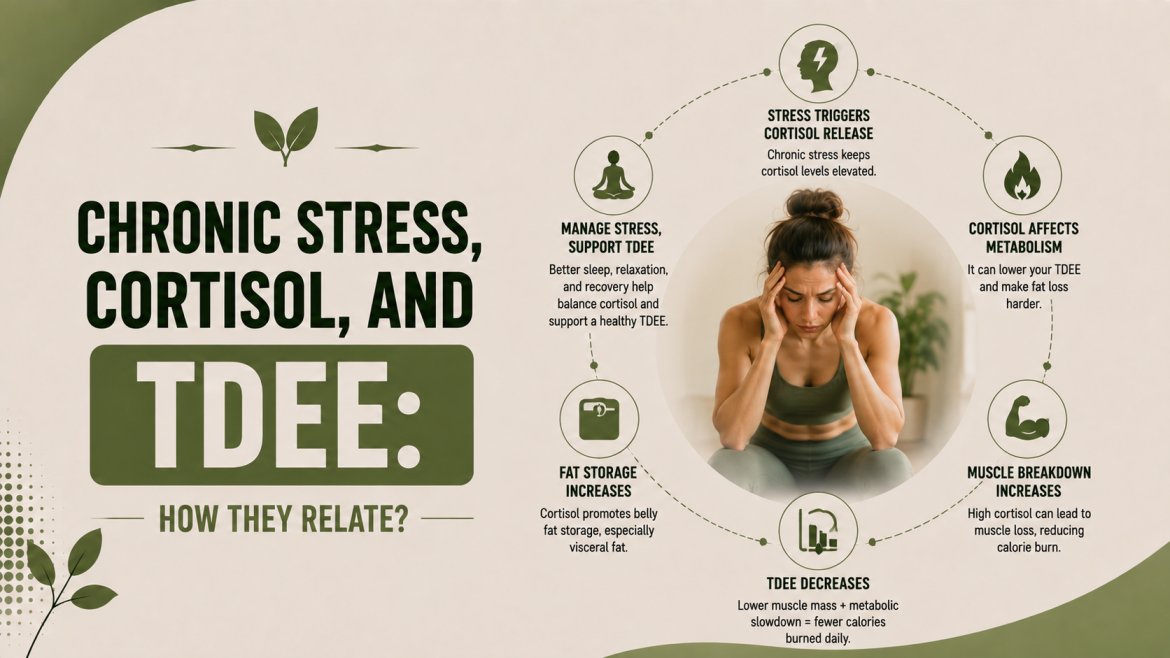
Chronic stress raises cortisol, and sustained elevation changes both where fat gets stored and how much a person moves each day. The effect on TDEE is indirect but measurable across weeks rather than days.
This differs from acute stress, which produces a short cortisol spike with minimal lasting metabolic consequence. Chronic stress keeps that spike elevated, and the sustained exposure is what a TDEE calculator has no way of accounting for.
This guide covers what cortisol does to fat storage specifically and how stress suppresses NEAT. It also covers the difference between acute and chronic exposure, and which interventions have real evidence behind them.
How Does Chronic Stress Change TDEE?
Stress affects TDEE through two separate pathways rather than one. Cortisol changes where the body stores fat, and stress-driven fatigue reduces spontaneous daily movement.
Pathway | What Changes | Timescale |
|---|---|---|
Fat storage pattern | Shifts toward visceral fat | Weeks to months |
NEAT suppression | Daily step count drops | Days to weeks |
Sleep interaction | Cortisol and poor sleep reinforce each other | Ongoing |
Neither pathway shows up in a standard TDEE formula. A calculator has no input for perceived stress or measured cortisol, the same blind spot shared by every factor covered in this cluster.
What Does Cortisol Do to Fat Storage?
Cortisol is the body's primary stress hormone, released by the adrenal glands in response to the hypothalamic-pituitary-adrenal (HPA) axis. It is one of six hormone systems that shape TDEE, and chronic activation keeps it elevated well beyond what any single stressful event would produce.
Research published in Psychosomatic Medicine by Elissa Epel and colleagues at Yale examined this directly. Women with higher cortisol reactivity accumulated significantly more abdominal fat over time. This held independent of total body weight. Two women of identical weight showed different fat distribution based on stress reactivity alone.
Fat Depot | Glucocorticoid Receptor Density | Response to Cortisol |
|---|---|---|
Visceral (abdominal) fat | High | Rapid triglyceride release and re-storage |
Subcutaneous fat | Lower | Comparatively muted response |
Why the abdomen specifically: Visceral fat carries far more glucocorticoid receptors than fat stored elsewhere. Cortisol binds these receptors and activates lipoprotein lipase, an enzyme that converts circulating triglycerides into stored fatty acids preferentially in that depot.
Visceral fat also generates its own inflammatory signals once established. Those signals feed back into the HPA axis, helping to keep cortisol elevated even after the original stressor has passed.
How Does Stress Suppress NEAT?
Non-Exercise Activity Thermogenesis (NEAT) covers spontaneous daily movement: walking, fidgeting, posture changes, taking stairs instead of a lift. It is highly sensitive to psychological state.
Chronically stressed people show three measurable movement changes, none of which involve a conscious decision to move less.
Fewer incidental daily steps, commonly 1,500 to 3,000 below an individual's own baseline
Reduced fidgeting and postural movement while seated or working
Lower completion rates for planned exercise sessions, even when intentions remain unchanged
The reduction happens gradually enough that most people do not notice it without reviewing step data directly. A stressed week can look identical to a normal week from the inside while producing a measurably different NEAT total. The complete TDEE guide attributes this gap to NEAT specifically, one of the four core energy components.
Where NEAT sits in the bigger picture: It is one half of the physical activity component of TDEE alongside structured exercise. The full breakdown of physical activity and TDEE covers both pieces and why NEAT specifically is the more fragile of the two.
Acute Stress vs Chronic Stress: Different Effects
Not all stress produces the same metabolic consequence. Duration and recovery time determine whether an episode has any lasting effect on TDEE.
Variable | Acute Stress | Chronic Stress |
|---|---|---|
Cortisol pattern | Brief spike, returns to baseline | Sustained elevation |
Typical duration | Minutes to hours | Weeks to months or longer |
Fat storage effect | Minimal to none | Measurable visceral fat accumulation |
NEAT effect | Negligible | Meaningful daily step reduction |
Recovery once resolved | Immediate | Weeks, sometimes longer |
A single stressful presentation or argument produces a cortisol spike that resolves within hours and leaves no measurable metabolic trace. A demanding work period lasting months, by contrast, keeps cortisol elevated long enough to shift both fat storage and daily movement.
In practice: The distinction that matters is not whether stress happens, since it always does, but whether the body gets meaningful recovery time between episodes. Chronic stress also accelerates the lean mass loss covered in the muscle loss and TDEE guide through cortisol's catabolic effect on tissue.
Stress also plays a specific role after a diet ends. Life stress is one of the most commonly cited triggers for post-diet weight regain. Cortisol-driven cravings and reduced NEAT both push against the maintenance calorie target. The guide to maintaining weight with TDEE covers regain prevention strategies that account for this.
What Interventions Lower Cortisol?
Several interventions have research support for reducing cortisol and its downstream metabolic effects. Consistency matters more than intensity for most of them.
Intervention | Evidence Level | Typical Timeframe to Effect |
|---|---|---|
Regular sleep of 7 to 9 hours | Strong | Days to weeks |
Moderate aerobic exercise | Strong | Weeks |
Mindfulness-based stress reduction | Moderate to strong | Weeks to months |
Social connection and support | Moderate | Ongoing |
Reducing caffeine in high-stress periods | Modest, situational | Days |
A 2011 study in the Journal of Obesity by Daubenmier and colleagues tested a mindfulness intervention specifically targeting stress-driven eating in overweight and obese women. Participants who reduced cortisol reactivity through the programme also showed reductions in abdominal fat, independent of any prescribed calorie change.
Why this result matters: It demonstrates that lowering cortisol reactivity alone, without a deliberate diet change, produced a measurable body composition shift. This supports cortisol as a genuine causal factor rather than just a correlate of stress-driven eating.
Sleep is the intervention with the fastest measurable payoff. The full mechanism connecting sleep and TDEE covers how sleep debt and cortisol reinforce each other in both directions.
How Does Stress Interact With Dieting Itself?
Dieting is itself a physiological stressor, which means the relationship between stress and TDEE compounds during active weight loss rather than staying separate from it.
A calorie deficit raises cortisol modestly under normal circumstances, and an aggressive deficit raises it further. Planning that deficit with the calorie deficit calculator rather than guessing helps avoid stacking an unnecessarily large deficit on top of an already stressful period.
The compounding pattern to watch for: Someone under high work or life stress who also starts a large calorie deficit is more likely to experience both suppressed NEAT and elevated visceral fat storage, working against the deficit's intended effect. Moderating deficit size during acknowledged high-stress periods is a reasonable adjustment, covered in the guide to losing weight with TDEE.
Frequently Asked Questions About Stress and TDEE
Does Stress Alone Cause Weight Gain?
Stress changes where fat gets stored and how much someone moves rather than directly adding calories. Sustained cortisol elevation shifts storage toward the abdomen and reduces NEAT.
Both effects change how a given calorie balance plays out over time, rather than adding intake directly. That reduced NEAT compounds with any step-count decline already covered in the NEAT guide.
How Long Does It Take for Stress to Affect TDEE?
Acute stress produces no meaningful lasting effect. Chronic stress sustained over several weeks begins producing measurable NEAT suppression. Visceral fat accumulation follows over months, based on the Epel Yale research and related cortisol reactivity studies.
Can Meditation Lower Cortisol Enough to Matter?
Research supports mindfulness-based interventions as a genuine lever. The Daubenmier 2011 study found that a mindfulness programme targeting stress eating reduced both cortisol reactivity and abdominal fat. This occurred in overweight women without any prescribed calorie change.
Is Belly Fat Always a Sign of High Cortisol?
Not always, but the connection is well documented. Visceral fat carries a high density of glucocorticoid receptors, making it particularly responsive to elevated cortisol. Genetics, overall body fat percentage, and diet composition also influence fat distribution independent of stress.
Does Exercise Help or Hurt Cortisol During High Stress?
Moderate aerobic exercise generally lowers cortisol and supports recovery. Very high-intensity training combined with inadequate recovery can itself elevate cortisol further, so the type and intensity of exercise matters during an already high-stress period.
How Do I Know If My Stress Is Chronic Rather Than Normal?
There is no single test, but a useful practical marker is duration and pattern rather than intensity of any one day. Occasional stressful days that resolve with normal sleep and recovery are typical and rarely produce measurable metabolic change.
A pattern lasting several weeks or longer fits the chronic profile covered in this guide. This is especially true when it disrupts sleep or reduces motivation for daily movement. Persistent fatigue, disrupted sleep, and a declining step count together form a stronger signal than any single symptom alone.