
10 Best Protein Calculators for Daily Protein Intake in 2026
Most protein calculators ask for weight and spit out one number. The best ones go further, adjusting for goal, training level, and age, and showing the math behind the result. We compared 10 tools on formula accuracy, output depth, and design to find which ones actually earn a spot in your bookmarks.

Your body has a number. Let's find it.
We calculate the exact calorie target your body needs, built from your stats and goal, then track everything against it daily. Log meals, add workouts, set a weight goal, and watch your numbers update in real time. Check in weekly to see calories, water, and weight trend in one place.
No spreadsheets. No guessing. Just results.
Most protein calculators ask for weight and return one number. The best ones go further, adjusting for goal, training level, and age. We compared 10 tools on formula accuracy, output depth, and design to find which ones give a genuinely usable daily target.
Daily protein intake is calculated from a small set of inputs: body weight, activity level, and goal. The two most common calculation methods are grams per kilogram of body weight (g/kg) and percentage of total daily calories, typically 10 to 35 percent.
The g/kg method is favored in sports nutrition research because it scales directly with lean tissue demand. Total calorie intake varies independently of muscle protein needs.
Research-backed ranges split clearly by goal. Sedentary adults need as little as 0.8 g/kg to prevent deficiency, while active adults building or preserving muscle benefit from 1.6 to 2.2 g/kg.
This list ranks the 10 best protein calculators based on formula quality, output depth, and companion tools. We also weighed how clearly each one turns body weight into a usable gram target. Our own Protein Calculator explains how goal, training level, and meal frequency each shift that target.
10 Best Protein Calculators, Reviewed and Ranked
The 10 best protein calculators below cover general-purpose platforms, research-backed guides, and supplement-brand tools. Each entry has been reviewed for the calculation method it uses, the depth of its output, and the companion calculators available on the same site.
1. TDEE Calculator Kit
TDEE Calculator Kit's protein calculator takes weight, activity level, goal, training level, and meals per day. It then applies research-backed g/kg targets to return a daily gram total and a per-meal amount. The tool runs Mifflin-St Jeor first to establish calorie context, so the protein percentage reflects an actual calorie budget rather than a number in isolation.
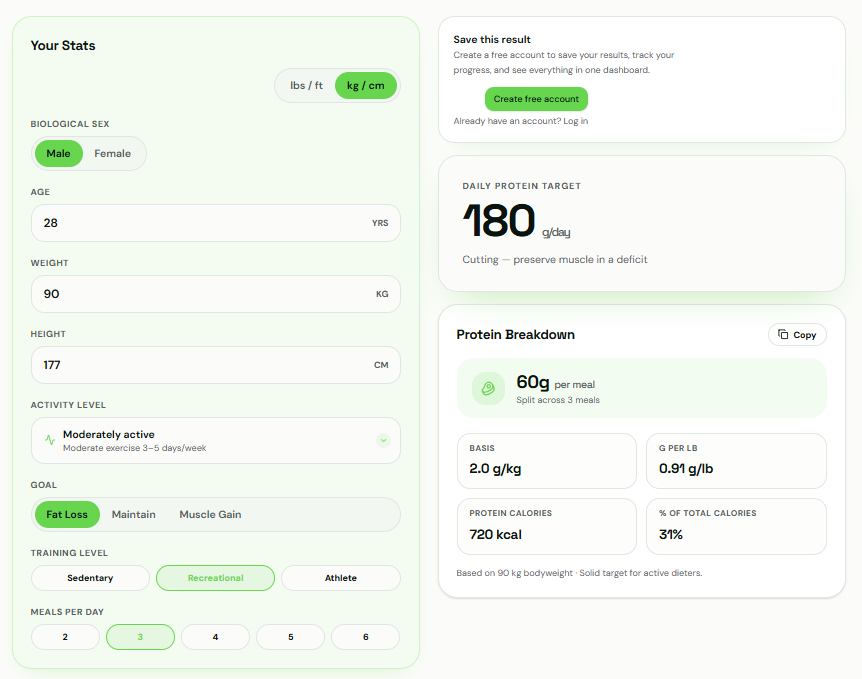
The output explains why the target shifts across goals and training levels, covering muscle protein synthesis, satiety, and the thermic effect of protein. Per-meal minimums also adjust upward for adults over 40 to account for anabolic resistance, a detail most calculators on this list skip entirely.
A full suite of companion calculators sits alongside the result. One option bases the target on goal weight rather than current weight, useful for anyone carrying excess body fat. No email address or account registration is required to see complete results.
Feature | Detail |
|---|---|
UI/UX Rating | 9.5 / 10 |
Key Highlights | Goal and training-level-adjusted g/kg targets, per-meal breakdown, calorie context via Mifflin-St Jeor, no sign-up required |
Calculators Available | Protein Calculator |
Read our protein reference guide to understand how TDEE and protein intake are connected and how they work together to support your nutrition goals.
2. Examine Protein Intake Calculator
Examine's protein calculator sits inside one of the most heavily researched nutrition guides online, with every recommendation tied to a numbered citation. The tool returns a range from 1.2 g/kg for sedentary adults up to 2.7 g/kg for serious athletes in specific contexts.
The surrounding guide breaks targets out separately for muscle gain, fat loss, older adults, pregnancy, lactation, and vegans.
This depth makes Examine closer to a research reference than a quick-answer tool. Someone who wants a single fast number may find the surrounding content denser than necessary. Anyone who wants to understand the evidence behind their target gets more citation-backed detail here than almost anywhere else.
Feature | Detail |
|---|---|
UI/UX Rating | 8 / 10 |
Key Highlights | Citation-backed ranges by life stage and goal, covers pregnancy/lactation/older adults/vegans specifically, no registration required |
Calculators Available | Protein Intake Calculator (embedded within a full evidence-based protein guide) |
3. BarBend Protein Intake Calculator
BarBend's calculator is reviewed by a registered dietitian nutritionist and a sports nutrition PhD, and it shows in the output. Rather than a single number, the tool returns three tiers: minimum, generally recommended, and high. Each is estimated from body weight alongside a BMR calculation using Mifflin-St Jeor.
The surrounding site sits inside BarBend's strength sports ecosystem, covering CrossFit, powerlifting, and bodybuilding. The calculator pairs with a macros tool and a high-protein food list with gram counts per serving. The three-tier output gives useful range context that a single-number calculator does not.
Feature | Detail |
|---|---|
UI/UX Rating | 8 / 10 |
Key Highlights | Three-tier output (minimum/recommended/high), expert dietitian and PhD review, BMR-based calorie context, food list included |
Calculators Available | Protein Calculator, Macros Calculator, BMR Calculator, 1RM Calculator |
4. Precision Nutrition Calculator
Precision Nutrition's protein target lives inside its broader Ultimate Macro Calculator rather than standing alone. The methodology is more sophisticated than most tools on this list.
Protein is set on a sliding g/lb scale, 0.65 to 1.35 g/lb, adjusted by sex, goal, and activity level. A built-in assumption also factors in that heavier individuals carry more body fat per pound at the same goal.
Output includes hand-portion guidance alongside gram totals, a distinctive Precision Nutrition feature that translates numbers into visual food portions. The tradeoff is that protein is never isolated on its own, since the tool is built around full macro planning rather than a protein-only question.
Feature | Detail |
|---|---|
UI/UX Rating | 7.5 / 10 |
Key Highlights | Sliding g/lb scale by body composition assumption, hand-portion output, credentialed coaching-certification brand |
Calculators Available | The Ultimate Macro Calculator (protein, carbs, fat, and portions in one output) |
5. Calculator.net Protein Calculator
Calculator.net's protein tool lets users choose between Mifflin-St Jeor and Katch-McArdle for the underlying BMR estimate. An optional body fat percentage input unlocks the latter. Output blends body-weight-based and percentage-of-calorie methods, and the surrounding page explicitly notes the tool's relevance for monitoring intake with kidney disease, liver disease, or diabetes.
The interface is text-heavy and functional rather than visual, consistent with the rest of the Calculator.net platform. It loads fast and returns results without registration, but the presentation favors reference-page depth over a clean single-answer display.
Feature | Detail |
|---|---|
UI/UX Rating | 7 / 10 |
Key Highlights | Dual BMR formula choice, medical-monitoring context noted, no registration required |
Calculators Available | Protein Calculator, Macro Calculator, BMI Calculator, Calorie Calculator |
6. Omni Calculator Protein Calculator
Omni's protein tool uses the USDA Dietary Guideline range of 10 to 30 percent of total calories. A toggle switches between a general recommendation and a sports-specific one. Inputs are limited to height, weight, age, and sex, making it one of the fastest tools on this list to complete.
Omni operates as a massive general calculator platform spanning science, finance, and everyday math. The protein tool sits alongside thousands of unrelated calculators rather than a focused fitness ecosystem. This makes it a reasonable quick-reference option without the goal-specific depth some other tools on this list provide.
Feature | Detail |
|---|---|
UI/UX Rating | 7 / 10 |
Key Highlights | USDA-based percentage range, general-vs-sports toggle, fast minimal-input design |
Calculators Available | Protein Calculator (part of Omni's broader health calculator category) |
7. ProteinPerDay Calculator
ProteinPerDay strips the input down to essentially one variable: body weight. The site is explicitly framed around a specific audience: adults over 40 and highly active individuals. It cites research suggesting standard protein guidelines undersell what these groups actually need.
The calculator itself is the simplest tool on this list by input count. This works well for someone who wants an instant number without answering several questions first. The tradeoff is less personalization than tools factoring in activity level or specific goals. The surrounding site does cite credible sources including the FDA and Harvard in its research references.
Feature | Detail |
|---|---|
UI/UX Rating | 6.5 / 10 |
Key Highlights | Single-input simplicity (weight only), framed for over-40 and highly active users, credible source citations |
Calculators Available | Protein Per Day Calculator (standalone, minimal companion tools) |
8. Ro Protein Calculator
Ro's protein calculator is built specifically around weight loss and muscle gain, reflecting the platform's broader identity as a telehealth and weight management service. Inputs cover current weight, goal, and activity level, with output suggesting 25 to 30 percent of calories from protein for fat loss support.
A notable point of honesty here is worth calling out directly. The surrounding content states plainly that no official protein-to-calorie ratio exists for weight loss, rather than presenting an invented figure as settled science. The tool also flags kidney disease as a reason to consult a healthcare provider before relying on the output.
Feature | Detail |
|---|---|
UI/UX Rating | 7 / 10 |
Key Highlights | Weight-loss-specific framing, transparent about guideline uncertainty, medical caution noted for kidney conditions |
Calculators Available | Protein Calculator (within Ro's weight-loss program tools) |
9. Optimum Nutrition Protein Calculator
Optimum Nutrition's calculator is framed as a quick quiz, promising a result in under 60 seconds. It sits inside the website of the world's largest sports nutrition brand, by its own description. The output includes a daily protein estimate alongside specific Optimum Nutrition product recommendations matched to the result.
This product-matching is the defining feature to know going in. The calculator functions as both a nutrition tool and a funnel toward Optimum Nutrition's own protein powder lineup. That's worth factoring in when weighing how neutral the recommendation is, compared to a tool with nothing to sell.
Feature | Detail |
|---|---|
UI/UX Rating | 6.5 / 10 |
Key Highlights | Fast quiz-style format, brand-name credibility, product recommendations tied to result |
Calculators Available | Protein Calculator (integrated with Optimum Nutrition's product catalog) |
10. Promix Nutrition Protein Calculator
Promix's calculator was designed by a credentialed registered dietitian and offers two distinct modes, General Fitness and Experienced Lifter, tailored to different training backgrounds. Three input categories feed the calculation, and the tool is built to work for both someone new to training and an elite athlete.
Like Optimum Nutrition's tool, the result feeds directly into Promix product recommendations. This positions the calculator as a lead-in to the brand's supplement line rather than a standalone reference. The dietitian-designed methodology is a genuine credibility point, even with the commercial framing layered on top.
Feature | Detail |
|---|---|
UI/UX Rating | 6.5 / 10 |
Key Highlights | Dietitian-designed, two experience-level modes, product recommendations tied to result |
Calculators Available | Protein Calculator (General Fitness and Experienced Lifter modes) |
How We Picked the Best Protein Calculators?
The best protein calculator does more than return a single gram figure. It accounts for goal, activity level, and training background, and presents the result in a way that translates into an actual daily eating pattern.
Five objective criteria were used to review and rank all 10 tools on this list.
Formula Accuracy: Does the tool use a validated g/kg range or percentage-of-calorie method grounded in sports nutrition research?
Output Depth: Does it return a daily gram target broken down by goal, or just one generic number?
Goal and Activity Granularity: Does it distinguish between fat loss, maintenance, and muscle gain, and adjust for training level?
Companion Tools Available: Are additional calculators on the same platform for deeper nutrition planning?
Interface Quality and Neutrality: Is the result clear and mobile-friendly, and is the output free of a product-recommendation funnel?
Tools built primarily to drive supplement sales were not excluded, but were ranked lower than comparable tools with no commercial result-matching involved.
What Is the Most Accurate Way to Calculate Protein Intake?
Grams per kilogram of body weight (g/kg) is the most accurate method for most active adults. It scales directly with the tissue protein actually needs to support. A fixed percentage of calories can produce very different gram totals for two people eating different total calories. This holds true even at identical body weight and training load.
Method | Best For | Limitation |
|---|---|---|
g/kg Body Weight | General and active adults | Requires an activity/goal adjustment layer |
Percent of Calories | Quick estimates alongside a calorie target | Varies independently of actual muscle demand |
RDA (0.8 g/kg) | Minimum to prevent deficiency | Too low for active adults or anyone in a deficit |
A 2017 meta-analysis by Morton and colleagues found 1.6 g/kg was sufficient to maximize resistance-training gains in most individuals. Intakes above that produced no added muscle-growth benefit.
How Much Protein Do I Actually Need Per Day?
Protein needs range from 0.8 g/kg for sedentary adults to 2.2 g/kg for those in an active fat-loss phase or building muscle through resistance training. The 0.8 g/kg RDA figure represents a minimum to prevent deficiency, not an optimal target for anyone training regularly.
Protein Targets by Goal:
Sedentary Maintenance: 1.2 g/kg covers daily protein turnover without training stress
Muscle Gain: 1.6 to 2.2 g/kg supports muscle protein synthesis alongside a calorie surplus
Fat Loss: 2.0 to 2.4 g/kg protects lean mass against the catabolic pressure of a calorie deficit
Older Adults (40+): Per-meal protein minimums shift upward toward 35 to 40 g due to anabolic resistance, even when the daily total stays similar
Is More Protein Always Better?
No. Protein intake has a point of diminishing returns for muscle growth, typically around 1.6 to 2.2 g/kg depending on training status. Additional protein beyond that adds digestive and financial cost without a measurable strength benefit.
Extremely high protein intake is not inherently dangerous for healthy adults with normal kidney function. It does displace calories that could otherwise come from carbohydrates or fats supporting training and hormone production. Individuals with chronic kidney disease should consult a doctor before increasing protein intake, since impaired kidneys handle protein's metabolic byproducts differently.
Does Protein Intake Change When You're Losing Weight?
Protein needs rise during a calorie deficit specifically. The body is more prone to breaking down muscle tissue for fuel when total energy intake is restricted. Research shows 2.0 to 2.4 g/kg reduces this muscle loss substantially compared to lower protein intakes at identical total calories.
Key Rule: Protein Stays High Even as Total Calories Drop
As calorie intake falls during a cut, protein's share often needs to rise toward 35 to 40 percent to hit the same gram target. Carbohydrate and fat get the smaller remainder.
How Often Should You Recalculate Your Protein Target?
Recalculate protein intake every time body weight changes by 5 kg or more. The same applies whenever the training goal shifts between fat loss, maintenance, and muscle gain. Since most protein methods are weight-based, a meaningful weight change shifts the gram target even if the g/kg ratio itself stays the same.
Age is a separate trigger. Anabolic resistance increases after 40. The same daily total needs larger per-meal amounts, closer to 35 to 40 g per sitting, to produce the same muscle-building response.
Can a Protein Calculator Help With Muscle Gain?
A protein calculator sets the specific gram target muscle gain depends on. It works alongside a calorie surplus and resistance training rather than replacing either one. Protein alone, without adequate total calories or a training stimulus, does not build muscle on its own.
Protein Target During Muscle Gain: 1.8 to 2.2 g per kilogram of body weight per day, based on the Morton et al. 2017 meta-analysis in the British Journal of Sports Medicine, paired with a 200 to 300 kcal surplus above TDEE for the most favorable ratio of muscle to fat gain.
How Accurate Are Online Protein Calculators?
Online protein calculators are accurate within the range sports nutrition research actually supports. This holds true provided body weight is entered honestly and the goal matches real training intensity. The output is a research-backed range, not a single precise biological requirement unique to one individual.
The biggest source of inaccuracy is goal mismatch rather than calculator error. Someone training lightly but selecting "athlete" or "high intensity" inflates their protein target beyond what their actual training stress requires. This adds unnecessary cost and meal-planning difficulty without a real benefit.
What Inputs Does a Protein Calculator Need to Be Accurate?
A protein calculator needs at minimum body weight and a stated goal to return a useful result. The strongest tools on this list add activity or training level, distinguishing fat loss from muscle gain. These two goals call for different gram targets even at identical body weight.
Input | Why It Matters |
|---|---|
Body Weight | The primary variable in every g/kg-based method |
Goal | Fat loss requires more protein than muscle gain at the same body weight |
Training Level | Higher training frequency and intensity raise muscle protein synthesis demand |
Meals Per Day | Determines the practical per-meal amount, not just the daily total |
Tools that skip goal and training level entirely, relying only on weight and a flat percentage, tend to produce less individualized targets. The full g/kg-by-goal method does better.
Is Protein Intake Different for Women?
The same g/kg targets apply to women and men, since protein needs scale with lean body mass and training stress rather than biological sex directly. Women typically carry a lower absolute lean mass than men at the same body weight. This naturally produces a lower total gram target without requiring a separate formula.
Life stage introduces real adjustments beyond the standard g/kg range. Pregnancy and lactation both raise protein needs above baseline. Research-backed macro targets for these stages account for this alongside the broader calorie increase each stage requires.