
Protein and TDEE: How They're Connected?
Protein doesn't just fill a macro target. It changes TDEE directly through digestion cost, suppresses appetite through a mechanism research still can't fully explain, and protects the muscle mass that keeps BMR from falling during a deficit. This guide covers all three pathways and what they mean for your calorie target.

Your body has a number. Let's find it.
We calculate the exact calorie target your body needs, built from your stats and goal, then track everything against it daily. Log meals, add workouts, set a weight goal, and watch your numbers update in real time. Check in weekly to see calories, water, and weight trend in one place.
No spreadsheets. No guessing. Just results.
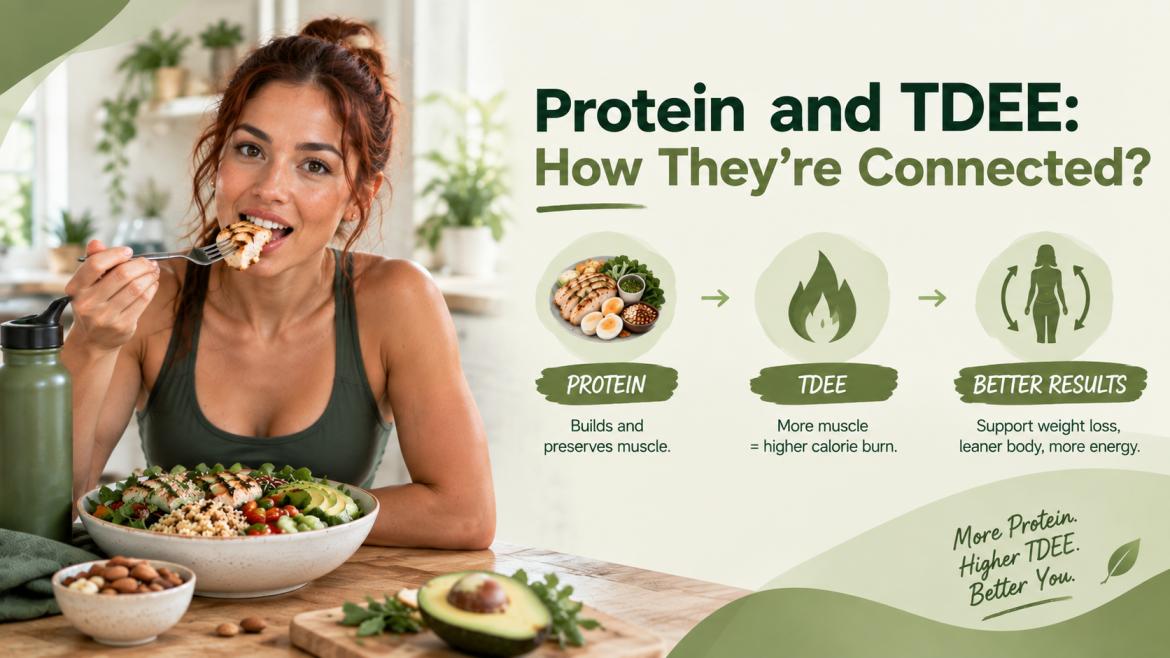
Protein affects Total Daily Energy Expenditure (TDEE) through three distinct pathways, not just one. It raises the calorie cost of digestion, suppresses appetite through a mechanism research still hasn't fully explained. It also protects the lean mass that keeps BMR from falling during a deficit.
Use the protein calculator to get a personalized target once you know your TDEE. This guide covers how each of these three pathways actually works and how much protein the research supports for different goals. It also covers where popular claims about timing and safety outrun the evidence.
Does Protein Actually Raise Your TDEE?
Yes, through the Thermic Effect of Food (TEF), the calorie cost of digesting and metabolizing what you eat. Protein is the most metabolically expensive macronutrient to process by a wide margin.
Macronutrient | Thermic Effect | Calories Burned per 100 kcal Eaten |
|---|---|---|
Protein | 20–35% | 20–35 kcal |
Carbohydrates | 5–10% | 5–10 kcal |
Fat | 0–3% | 0–3 kcal |
This is a direct, measurable TDEE increase, not a rounding error. Someone eating 2,000 kcal at 30% protein burns 120 to 210 more calories through digestion than the same intake at 10% protein. That gap alone can raise effective TDEE by 80 to 140 calories daily, with no change in movement required.
Does Protein Help You Eat Less Without Trying?
This is where protein's effect on TDEE gets more interesting, and the honest research is more surprising than the popular explanation usually suggests.
What Did the Landmark Study Find?
A 2005 trial published in the American Journal of Clinical Nutrition tested this directly. Protein intake rose from 15% to 30% of calories while fat was reduced, with carbohydrate intake held constant. Once participants were allowed to eat freely, the results were substantial.
Outcome | Result |
|---|---|
Spontaneous Calorie Reduction | 441 kcal/day, unprompted |
Body Weight Change | −4.9 kg |
Fat Mass Change | −3.7 kg |
Participants ate 441 fewer calories a day without being told to restrict anything. Raising protein to 30% of intake appears to trigger genuine, automatic appetite suppression strong enough to produce measurable weight and fat loss on its own.
Why Don't We Fully Understand the Mechanism?
This is the honest part most summaries skip. The same researchers specifically tested whether this effect could be explained by ghrelin or leptin, the two hormones most commonly credited with protein's appetite-suppressing reputation. It couldn't. The satiety effect held even though these hormone levels didn't change as expected.
This doesn't make the finding less real. It means the common explanation ("protein lowers ghrelin and raises leptin") is more confident than the evidence actually supports. The effect itself, eating meaningfully less without trying, is well documented. The exact mechanism behind it remains only partly understood.
How Much Protein Do You Need Based on Your Goal?
General guidance varies meaningfully depending on what the protein target is actually meant to accomplish.
Goal | Protein Target | Why |
|---|---|---|
General Health | 0.8–1.2 g/kg | Covers baseline physiological needs |
Fat Loss | 1.6–2.4 g/kg | Preserves lean mass during a deficit |
Muscle Gain | 1.6–2.2 g/kg | Supports muscle protein synthesis |
Athletic Performance | 1.8–2.4 g/kg | Supports recovery alongside training volume |
The fat loss range sits well above the general health minimum for a specific reason. A calorie deficit alone increases the risk of losing muscle alongside fat, and higher protein intake is the most direct, evidence-backed lever for preventing that.
Does Protein Timing Matter for TDEE-Based Goals?
Fitness culture places heavy emphasis on consuming protein within a narrow post-workout anabolic window. Research does not support this emphasis as strongly as the popular version claims.
Total daily protein intake matters far more than the specific hour it's consumed. Meta-analyses examining timing specifically have found that once total daily protein is matched, timing within a few hours of training produces no meaningful difference in muscle outcomes.
This doesn't mean timing is irrelevant in every sense. Spreading protein across three or more meals tends to support better satiety than concentrating it in one sitting. It also supports more consistent muscle protein synthesis across the day. The emphasis belongs on consistent distribution, not a narrow post-workout deadline.
Does Protein Preserve Muscle During a Calorie Deficit?
Yes, and this connects directly back to TDEE itself, not just body composition. Muscle tissue burns substantially more at rest than fat tissue. Losing lean mass during a deficit lowers BMR, which lowers TDEE, narrowing the deficit further than intended.
This creates a genuine feedback loop worth understanding. A deficit that costs muscle produces a smaller BMR to work with going forward. The same calorie target becomes progressively less effective the longer muscle loss continues unchecked.
Adequate protein breaks this cycle at its source. By limiting how much lean mass gets broken down for energy during a deficit, higher protein intake helps keep BMR, and therefore TDEE, closer to where it started. Sizing the deficit itself correctly still matters, but protein determines what gets lost within that deficit.
What Are the Best Protein Sources for Hitting Your Target?
Protein density varies considerably between sources, which affects how realistic a given daily target actually is to hit.
Source | Protein Per Typical Serving |
|---|---|
Chicken Breast (100g) | 31g |
Greek Yogurt (200g) | 20g |
Eggs (2 large) | 12g |
Salmon (100g) | 25g |
Lentils (1 cup cooked) | 18g |
Tofu (200g) | 20g |
Whey Protein (1 scoop) | 24g |
Animal sources generally reach a given gram target in a smaller portion than plant sources. This doesn't rule out a plant-based approach, but it does mean plant-based eaters typically need larger portions or more deliberate combining of sources to hit the same total.
Does Protein Need Change With Age?
Yes, and the mechanism goes beyond simply needing more as you age. Research on anabolic resistance has found that older adults need a larger protein dose per meal to trigger the same muscle-building response.
This effect has been documented specifically and substantially in postmenopausal women. The protein and menopause guide covers a controlled trial where a standard 15g protein serving failed to stimulate muscle protein synthesis in this population, a finding with direct implications for anyone over roughly 50, not only women.
How Much Protein Is Too Much?
A common concern, usually framed around kidney health, has far less support in healthy individuals than the popular version of the claim suggests.
For people without pre-existing kidney disease, research has not established a clear upper safety limit within commonly recommended ranges. The kidney-damage concern originated largely from studies in people who already had impaired kidney function, where the physiology genuinely differs from a healthy population eating a higher-protein diet.
This doesn't mean unlimited intake is advisable. It means staying within the 1.6 to 2.4 g/kg range covered earlier carries no established risk for most healthy adults. Anyone with existing kidney or liver conditions should raise concerns with a doctor directly.
Does This Change If You Have a Specific Health Condition?
The targets and mechanisms covered in this guide apply to the general population. Certain conditions shift the numbers or the reasoning behind them meaningfully enough to warrant their own dedicated coverage.
PCOS changes the picture through its connection to insulin resistance and satiety signaling specifically. The protein for PCOS guide covers research supporting a target toward 1.8 to 2.0 g/kg, including a trial where a protein swap alone, without any larger calorie cut, nearly tripled fat loss at an identical deficit.
Menopause changes the picture through the anabolic resistance mechanism already covered above, pushing the useful range higher than general fat-loss guidance alone would suggest.
Frequently Asked Questions About Protein and TDEE
Does Eating More Protein Directly Raise My TDEE?
Yes, through the Thermic Effect of Food specifically. Protein burns 20 to 35 calories per 100 calories consumed during digestion, compared to 5 to 10 for carbohydrates and 0 to 3 for fat.
Can Protein Alone Help Me Lose Weight Without Changing Anything Else?
Research suggests it can meaningfully reduce spontaneous calorie intake on its own. A landmark 2005 trial found participants ate 441 fewer calories daily, without instruction, after protein intake rose to 30% of their diet.
Why Don't Researchers Fully Understand How Protein Suppresses Appetite?
The same 2005 trial specifically tested whether ghrelin and leptin changes explained the effect, and found they did not. The appetite-suppressing result is well documented; the exact mechanism behind it remains only partly understood.
Does It Matter When I Eat My Protein During the Day?
Total daily intake matters more than timing. Research comparing immediate post-workout protein against delayed timing, at matched daily totals, has found no meaningful difference in outcomes.
How Much Protein Do I Need If I'm Just Trying to Maintain Weight?
Roughly 0.8 to 1.2 g/kg covers general health needs at maintenance. This range sits below the 1.6 to 2.4 g/kg typically recommended specifically during a calorie deficit, where lean mass protection becomes a bigger concern.
Is a High-Protein Diet Safe for My Kidneys?
For healthy individuals without existing kidney disease, no clear upper safety limit has been established within commonly recommended ranges. The original kidney-damage concern traces mostly to research in populations who already had impaired kidney function.
Does Protein Intake Need to Be Higher After Menopause?
Yes. Documented anabolic resistance in postmenopausal women means a standard protein serving produces a smaller muscle-building response than the same serving in a younger adult. A larger per-meal dose compensates for this.
Should I Choose Animal or Plant Protein Sources?
Either can reach the same daily gram target. Animal sources typically require smaller portions to get there. Plant-based eaters often need larger portions, or more deliberate combining of multiple sources across the day.