
Menopause Belly Fat: How Many Calories to Lose It?
Menopause doesn't just add weight, it relocates it. Visceral fat can nearly triple as a share of total body fat during this transition, separate from ordinary age-related weight gain. This guide covers why that shift happens and how many calories to eat to address it directly.

Your body has a number. Let's find it.
We calculate the exact calorie target your body needs, built from your stats and goal, then track everything against it daily. Log meals, add workouts, set a weight goal, and watch your numbers update in real time. Check in weekly to see calories, water, and weight trend in one place.
No spreadsheets. No guessing. Just results.
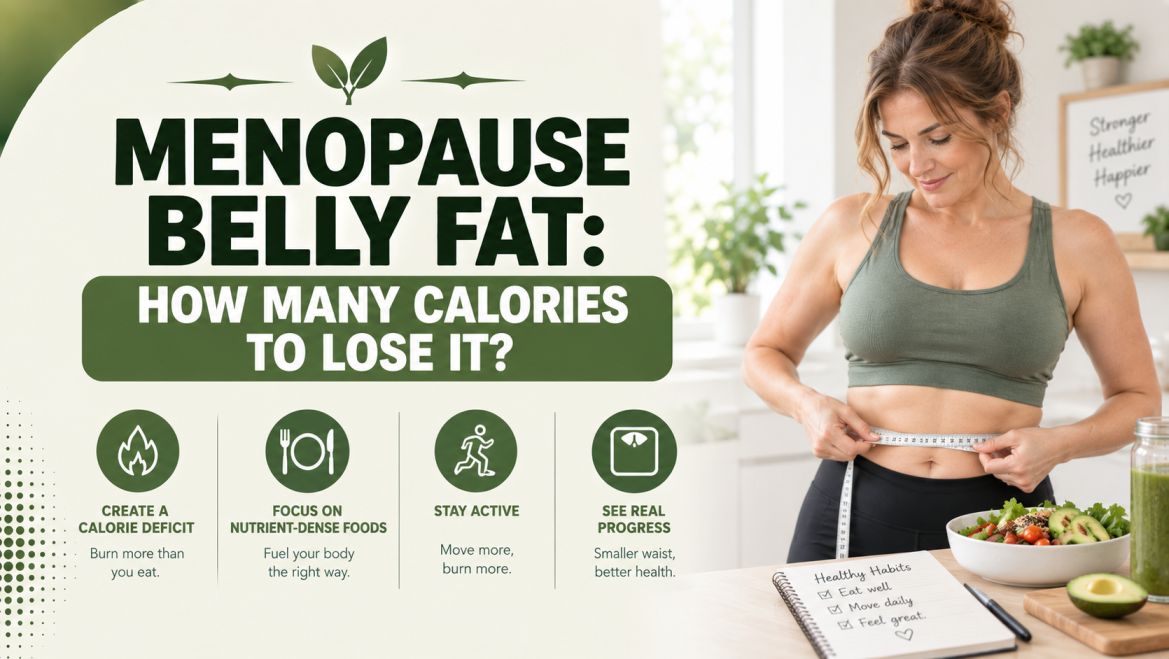
Menopause changes where fat gets stored, not just how much accumulates. Visceral fat, stored around abdominal organs, can shift from roughly 5 to 8% of total body fat before menopause to 15 to 20% after. That change differs from ordinary weight gain.
Run the TDEE calculator for menopause first to set an accurate baseline. This shift in fat storage location matters for strategy even before any calorie number gets calculated.
This guide covers why menopause specifically relocates fat to the abdomen and what the research shows about the hormonal mechanism. It also covers exactly how many calories to eat to address it.
An estimated 1.3 million women in the United States reach menopause each year. Abdominal fat is among the most commonly reported physical changes during this transition. The research below focuses specifically on what drives that pattern and what actually addresses it.
Why Does Fat Move to Your Belly During Menopause?
Two separate processes happen at roughly the same time in a woman's forties and fifties. Conflating them is where most confusion about menopause weight gain starts.
Is This Different From Normal Aging Weight Gain?
A four-year longitudinal study tracked women through the menopausal transition. Subcutaneous fat, the kind stored under the skin more generally, increased with age regardless of menopausal status. Visceral fat specifically, though, tracked with menopause onset itself.
Fat Type | What Drives It |
|---|---|
Subcutaneous Fat (Hips, Thighs) | Tracks with age, happens regardless of menopause |
Visceral Fat (Abdomen) | Tracks specifically with the menopausal transition |
This distinction changes how the problem should be framed. General aging explains some weight gain in every woman over time. The specific shift toward the belly is a separate, hormonally driven process tied to menopause itself, not simply more years lived.
What Does the Research Show About the Estrogen Connection?
The mechanism behind this shift centers on estrogen decline, though the full biological pathway is not yet completely mapped.
As estradiol drops through the menopausal transition, the ratio between estrogen and androgens shifts toward relative androgen dominance. This happens even without androgen levels rising in absolute terms. This ratio change independently predicts the central fat pattern many women notice.
The scale of this shift is substantial. Visceral adipose tissue has been measured increasing from roughly 5 to 8% of total body fat before menopause to 15 to 20% after, alongside measurable increases in trunk fat and intra-abdominal fat area documented across multiple longitudinal cohorts.
Muscle mass declines over the same period. Postmenopausal women show significantly lower lean body mass than premenopausal women across every weight category studied. This decline compounds the visceral fat shift, since less muscle means a lower resting energy expenditure working against the same deficit.
Does HRT Change This Pattern?
Given how directly estrogen connects to this fat shift, whether hormone therapy affects it is a reasonable and frequently asked question.
The evidence here is genuinely mixed depending on study design. A large observational cohort study found menopausal hormone therapy associated with reduced total and visceral adiposity compared to non-users. A separate two-year randomized controlled trial using CT and DXA imaging found no significant difference in intraabdominal fat between HRT and placebo groups.
Randomized trials generally carry more weight than observational cohorts, since cohort comparisons can reflect who chooses treatment rather than the treatment's actual effect. The full breakdown of what the strongest available evidence shows about HRT and weight sits in the HRT and weight gain guide, which covers this exact tension between study types in more depth.
Does a Standard TDEE Calculator Account for This Shift?
A standard formula estimates calorie needs from age, weight, height, and activity level. It has no direct way to account for the estrogen-driven changes in fat distribution and muscle mass covered above.
Reduced energy expenditure has been documented specifically at menopause onset, independent of activity level changes. A formula calibrated on general population data may not fully capture what a woman in this transition actually needs.
This is exactly the gap a menopause-specific adjustment is designed to close. Stage-specific corrections, rather than treating every point in the transition identically, are covered in the full menopause and TDEE guide.
How Many Calories Should You Eat to Lose Menopause Belly Fat?
The deficit principle itself does not change here. What changes is the starting number and the added importance of protecting the muscle mass already under pressure from the transition itself.
A moderate 250 to 500 kcal daily deficit below the menopause-adjusted TDEE remains the evidence-based range, the same target used broadly for sustainable fat loss.
Consideration | Why It Matters Here Specifically |
|---|---|
Start From an Adjusted Number | Standard formulas may overestimate needs during this transition |
Avoid Aggressive Deficits | Larger deficits risk accelerating the muscle loss already occurring |
Prioritize Consistency | Visceral fat mobilizes gradually, not in rapid short bursts |
A deficit that is too aggressive works against the exact muscle mass this transition is already eroding. A moderate, sustained approach protects lean tissue better than a faster, larger cut that risks losing muscle alongside fat.
What Does This Look Like in Practice?
Take a 65 kg postmenopausal woman with a standard formula estimate of 1,900 kcal. That number gets adjusted down slightly to reflect the reduced energy expenditure documented at this life stage.
Step | Calculation | Result |
|---|---|---|
Standard Formula Estimate | Unadjusted TDEE | 1,900 kcal |
Menopause-Stage Adjustment | Reflects documented reduction in energy expenditure | ~1,800 kcal |
Moderate Deficit | 300 kcal below adjusted TDEE | 1,500 kcal |
Starting from the unadjusted number and applying the same 300 kcal deficit would leave her eating closer to 1,600 kcal, a smaller real deficit than intended once the actual adjustment is accounted for.
Does Protein Matter More Now Than Before Menopause?
Given the muscle mass decline already happening independent of diet, protein intake carries added importance during this specific transition compared to earlier in life.
Higher protein intake helps preserve lean mass during any calorie deficit. That preservation matters more here, since muscle loss during a deficit compounds a decline already underway from the hormonal shift itself.
A deficit paired with insufficient protein risks losing exactly the tissue this transition already puts at risk, working against the goal rather than toward it.
The specific gram targets and research behind why this matters this much during menopause are covered in the protein for menopause guide, which addresses targets adjusted for this life stage specifically.
How Do You Track Progress Beyond the Scale?
Scale weight alone can miss the composition shift this guide has covered. Total weight can stay stable while the ratio of muscle to fat, and where that fat sits, both change underneath it.
Waist circumference, measured consistently at the same point, tracks visceral fat change more directly than total body weight. A body fat percentage calculator adds a second data point, revealing composition shifts a static scale number cannot show on its own.
What Common Mistakes Undermine Progress at This Life Stage?
A handful of predictable errors explain most cases where a reasonable plan fails to produce the expected change during this specific transition.
Do You Apply a Deficit Sized for an Earlier Life Stage?
Continuing to use a calorie target calculated years earlier is one of the most common and easily corrected mistakes. This is especially true before the transition's effect on energy expenditure and muscle mass took hold.
Do You Judge Progress by Weight Alone?
Total weight can remain stable while composition shifts underneath it. Relying on the scale alone risks missing genuine change, or falsely concluding a correct plan isn't working.
Mistake | Why It Backfires | The Fix |
|---|---|---|
Using an Outdated Calorie Target | Energy expenditure changes across the transition | Recalculate using a stage-specific adjustment |
Scale-Only Tracking | Composition shifts can hide behind stable weight | Add waist measurement or body composition tracking |
Aggressive Deficits | Risks accelerating existing muscle loss | Stay within the moderate 250–500 kcal range |
Skipping Resistance Training | Muscle loss continues unaddressed | Pair diet with resistance training specifically |
Each of these mistakes shares a common thread. They treat this transition as identical to any other point in life, when the underlying physiology has measurably changed in ways that affect both the target itself and how progress should be measured.
Does Sleep Affect Menopause Belly Fat Specifically?
Sleep disruption is common during this transition, driven by night sweats and hormonal fluctuation. It adds a layer worth understanding alongside the direct estrogen-visceral fat connection already covered.
How Does Poor Sleep Compound This Pattern?
Reduced sleep quality independently affects cortisol regulation and appetite hormones, potentially compounding the same central fat storage pattern menopause already drives through the estrogen pathway.
This is not the primary mechanism this guide has focused on, but it is worth addressing directly. Persistent sleep disruption during menopause is worth raising with a doctor, both for its own sake and because it may be working alongside the hormonal shift already covered to compound the same outcome.
Frequently Asked Questions About Menopause Belly Fat
How Many Calories Should I Eat to Lose Menopause Belly Fat?
Start from a menopause-adjusted TDEE rather than a standard formula, then apply a moderate 250 to 500 kcal daily deficit from that adjusted number. Avoiding an aggressive deficit protects muscle mass already under pressure from the hormonal transition itself.
Is Menopause Belly Fat Different From Regular Weight Gain?
Yes. Research distinguishes subcutaneous fat, which tracks with age generally, from visceral fat, which tracks specifically with the menopausal transition. Visceral fat's share of total body fat has been measured nearly tripling across this transition.
Does HRT Reduce Belly Fat During Menopause?
The evidence is mixed depending on study design. An observational cohort found an association between hormone therapy and reduced visceral fat. A randomized controlled trial using imaging found no significant difference, and randomized evidence generally carries more weight.
Can Exercise Alone Fix This Fat Redistribution?
Exercise, particularly resistance training, helps preserve the muscle mass menopause tends to erode. It works best alongside an accurately sized calorie deficit, not as a standalone fix for fat distribution.
Anyone factoring in broader life-stage adjustments beyond menopause specifically can also reference the general TDEE calculator for women for that wider context.
Why Does My Weight Stay the Same While My Waist Gets Bigger?
This reflects the exact redistribution pattern this guide covers. Total weight can remain stable while fat shifts toward the abdomen and muscle mass simultaneously declines. Your shape changes without the scale number necessarily changing at all.
How Long Does It Take to See Change in Menopause Belly Fat?
Visceral fat responds to a sustained deficit, but expect a longer timeline than general weight loss guidance suggests. Several months of consistent tracking often pass before meaningful waist circumference change becomes reliably visible.
Does Age at Menopause Onset Change How Much Belly Fat Accumulates?
Current research has not isolated this specific variable in detail. The core mechanism, declining estrogen driving the estrogen-to-androgen ratio shift, applies across the transition regardless of the specific age it begins.
Should I Focus on Diet or Exercise First for Menopause Belly Fat?
Diet determines whether the deficit needed for fat loss actually exists, while exercise, particularly resistance training, protects the muscle mass menopause already puts under pressure. Both matter, but an accurate calorie target is the foundation the other pieces build on.
Is Menopause Belly Fat More Dangerous Than Fat Stored Elsewhere?
Visceral fat specifically has been linked to elevated cardiometabolic risk in the research covered throughout this guide. This is part of why researchers treat this particular fat depot as worth tracking separately from general body weight.
Does This Fat Pattern Reverse Once You're Fully Postmenopausal?
Current longitudinal research tracks the shift occurring across the transition and into the postmenopausal period. There is no strong evidence of spontaneous reversal once hormone levels stabilize at their lower baseline.
Can Weight Training Alone Change Where Fat Is Stored?
Resistance training builds and preserves muscle effectively, but current evidence does not support spot-reduction or a direct effect on fat storage location. It works alongside, not instead of, the calorie deficit that drives actual fat loss.
Does Perimenopause Cause the Same Fat Redistribution as Postmenopause?
Longitudinal research tracks visceral fat area increasing progressively from premenopause through perimenopause and into postmenopause. The shift appears to begin before menopause is technically complete, not abruptly at a single point.
Is Weight Gain During Menopause Inevitable?
Not entirely, though the hormonal mechanisms covered in this guide operate independent of individual choices. An accurately calculated calorie target, adequate protein, and resistance training can meaningfully offset, though not necessarily eliminate, the underlying physiological pressure toward central fat gain.